A Scotsman Shares His Story

This article appeared in our local newspaper, the Vernon Morning Star on Wednesday, December 5, 2012. Thanks, Katherine Mortimer, Lifestyles Editor, for coming over to interview us and for an excellent article. The only correction we’d make is in the quote from me “that’s it for Scotland for me. I’m never going back.” Though I guess I did say that, I really meant that I’m never going back to Scotland to live. I was last there in 2000 and found it too expensive. Besides that, Canada is now home for me. Actually, I can’t even go out of Canada at the moment, as I no longer qualify for travel health insurance – too many health concerns. We hope that restriction can be lifted sometime in the future – time will tell. Hope you enjoy the article, we did!

A Scotsman shares his story                                                                       Okanagan's Mr Scotland and His Bonnie Lassie

By Katherine Mortimer – Vernon Morning Star

Published: December 05, 2012


Gayle and Ian Moore-Morrans (Okanagan’s Mr. Scotland and his Bonnie Lassie) in full regalia for a performance of song. Ian’s book, ‘From Poverty to Poverty: A Scotsman Encounters Canada, has just been published.


When Ian Moore-Morrans looks back on his childhood on the coast of Scotland, it isn’t with what could be called affection.


But the cold, the damp, the constant hunger and life of poverty have made for a fascinating life story, which forms the basis for the Vernon author’s memoir, From Poverty to Poverty: A Scotsman Encounters Canada.


Moore-Morrans sets the stage from the first chapter, The Cold and Hungry Early Years:


“Thinking back on my early childhood, the most miserable overall time was when it was evening, dark outside, middle of winter, clothes damp and cold from the rain, no oil for the lamp, no candles either, which meant no light of any kind in the dump we lived in, no fire to warm me a wee bit and no food.”


Sipping a cup of hot coffee while sitting in the cozy — and warm — Vernon home he shares with his wife, Gayle Moore-Morrans, Ian explains that he was bitten by the writing bug at the age of 60.


His first novel, Beyond the Phantom Battle: Mystery at Lock Ashie, was published in 2010.


The idea for a memoir began when, as a recent immigrant to Canada, his late wife, Mary, used to send him to the grocery store.


“As I was going through the checkout, my Scottish accent always gave me away and inevitably one of the girls would tell me their grandfather was Scottish but they never knew anything about him.


“So I told my wife I was going to write my life story so my grandchildren and two daughters would know about their roots — I think they need to know where I come from.”


A retired machinist, the Scottish-Canadian grew up in Campbeltown on the Kintyre Peninsula, Argyll, Scotland.


Ian and his brother were raised by their single mother during the Depression of the ‘30s and subsequent years of the Second World War.


“We had no bread winner and of course there was nothing in the way of social services in those days. I used to put cardboard in my shoes after the soles wore out.


“It was a pretty bleak childhood, with all of us living in the attic, just 10 feet by 10 feet, with a table, a bed and a dresser. All four of us slept in one bed: me, my brother, my mother and my grandmother.”


Ian has lived in various places all over Canada since emigrating from Scotland in 1965.


“I was doing well in Scotland by this point but I had itchy feet.


“I wanted to go to Australia, but an unscrupulous government agent encouraged me to select Canada and told me all of the good things about it, that there was no crime in Toronto, that you could buy a house for $200, and that there were no slums.”


With a job lined up for him as a machinist, Ian brought his wife and young daughters across the Atlantic only to discover the job had fallen through. Living in Ontario, he worked a series of short-term jobs, including a stint as a Wonderbread salesman.


“In Scotland, I had a nice council house and I wasn’t one for going to the pub and spending my money, so it was difficult to give up the life we had there.”


Told with honesty and plenty of humour, From Poverty to Poverty has been compared to Frank McCourt’s acclaimed memoir, Angela’s Ashes.


Like the late Irish author, Ian has an uncanny ability to recall conversations and specific details, from his childhood, to his time in the Royal Air Force, from raising children with Mary, to coming to Canada and the subsequent poverty in which they lived for the first few years.


With Gayle as his editor, Ian began working on his book a number of years ago, writing down everything he remembered.


“I had no outline, no notes, I just kept on writing as it came to me. It was painful at times to look back and I get emotional. The last time I went back I told my late wife, ‘that’s it for Scotland for me. I’m never going back [here to live].’”


Published by Friesen Press in Victoria, From Poverty to Poverty is filled with photos detailing Ian’s life, but only from a certain stage.


“He has no photos of his childhood, the first one was taken when he was 14 and in the Salvation Army band,” said Gayle.


Besides writing, Ian specializes in singing Scottish ballads while outfitted in full-kilt regalia. He and Gayle, a retired editor, sing, write, edit and relax in Vernon since moving here from Mexico in 2008.


In addition to his novel and memoir, Ian has also published a how-to eBook, Metal Machining Made Easy, in 2002.


The second volume of his memoir, Came to Canada, Eh? is now under way.


Ian and Gayle were both widowed when they met in 2003 in Winnipeg.


“When we were courting, he showed me the book, which was then just stacks of paper, rather than an actual book. And I thought it was wonderful, but he needed an editor as he wrote in a sort of ‘stream-of-consciousness’ style.”


They were married three months after their first meeting and Gayle, a magazine editor, took an early retirement in 2004. After selling their house, they bought a motor home and left Winnipeg to explore retirement in Mexico, eventually settling on the shores of Lake Chapala, a large community of English-speaking ex-patriots. Joining the Lake Chapala Society Writers’ Group, they met writers from around the world.


Returning to Canada in 2007, the couple spent a year in Penticton before moving to Vernon.


The public is invited to readings for From Poverty to Poverty: A Scotsman Encounters Canada at the Moore-Morrans residence, Lakepointe, #69, 6688 Tronson Rd. (just west of the airport) Dec. 13, at 2 p.m. and again at 7:30 p.m. Please RSVP to 250-275-1446 or gayleian@gmail.com. Signed books will be for sale. Since Dec. 13 is St. Lucia Day (the beginning of the Christmas season in Sweden) and Gayle’s heritage is Swedish, St. Lucia baking, some Scottish goodies, coffee and tea will be served.


The book is available online through Chapters, Amazon, Barnes and Noble and can be ordered through booksellers or directly from the author.

SHARING SOME PHOTOS FROM IAN’S AUTOBIOGRAPHY, “FROM POVERTY TO POVERTY:

This slideshow requires JavaScript.

(Gayle, Ian’s wife and editor here.) I decided to share some photos from Ian’s autobiography on this site. Though I wasn’t in the picture, so to speak, for any of these, it was my task to choose them from Ian’s pile of photos, scan and adjust them for the book. That was quite a feat for Ian’s photos from Egypt, of the Campbeltown Pipe Band and of his parents which were taken with the camera he purchased in Egypt. The existing photographs were just a little bigger than a large postage stamp, so it was a challenge to scan and save them to a size that could be printed in the book.  Since Canadian Remembrance Day and the USA’s Veterans’ Day has just passed, we’ve been inundated with photos of military men from the past. Ian’s are from the pre-Suez Canal crisis days in the UK and Egypt (1950-1954). He says he was in the Royal Air Force when they were “feeding them, not needing them.”

Today, November 15th,  we are giving a book reading and discussion at Vertigo Gallery in Vernon BC, as part of their weekly November series “Vertigo Voices.” Ian will be reading from his autobiography “From Poverty to Poverty: A Scotsman Encounters Canada” and we’ll be answering questions and discussing the book and the process of writing a memoir.

Answering a Question Regarding Kilts

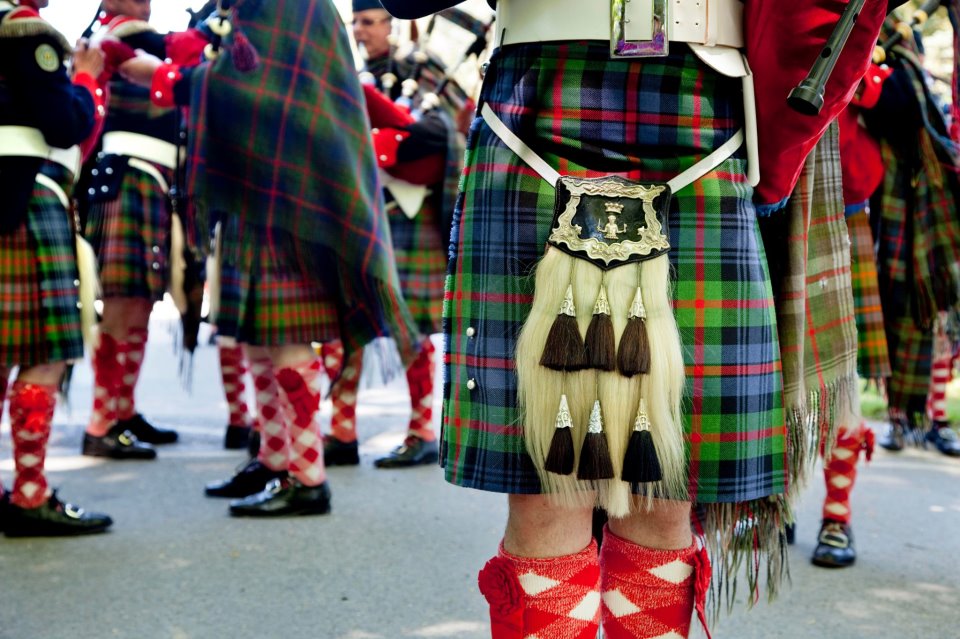
I love this photo from the Facebook page “I am a Scot.” In answer to a question posed in a comment: “What is underneath the kilt?” I quoted from my recently published autobiography entitled, “From Poverty to Poverty: A Scotsman Encounters Canada.” It concerns my life as a teenager in the late 40s in Campbeltown, Argyll.

“During those years I was also in the Army Cadets. It was something to do midweek, especially during the winter. There I was issued with a tartan kilt that I just loved to wear—it meant that I was truly Scottish. (Well, didn’t it? Now I wear my own kilt any time I get the chance.) Good job we didn’t wear anything under the kilt, for I didn’t have any underpants anyway! I can remember older cadets checking us to be sure we weren’t wearing anything underneath.”

Writing Dialogue isn’t Easy

Writing Dialogue isn’t Easy. Please check out the referenced posting from Francis Guenette on her blog: “disappearing in plain sight – writing about writing”. I’ve also added the following comment with reference to the difficulty of writing dialogue.

Thanks for this post. It’s very true that writing dialogue isn’t easy. The particular “problem” I’ve encountered in writing dialogue in both my novel: “Beyond the Phantom Battle: Mystery at Loch Ashie” and my autobiography: “From Poverty to Poverty: A Scotsman Encounters Canada” was writing in the Scottish vernacular, as both books were set in Scotland (the latter partially so).

My editor, who is not Scottish-born, had quite a workout learning the spelling and nuances of my attempt to record written Scots-English. In fact, one computer program sent us the message that there were so many errors in spelling that we could not use the spell-check!!! In the novel, which uses the vehicle of time travel, I also had to try to convey that the Scottish persons my 21st Century heroes encountered when they found themselves somehow transported back to the 12th Century spoke in the Gaelic but the heroes, who didn’t speak or understand Gaelic, heard it as Scots-English and vice-versa. I chose to show the Gaelic, not by using that language, but by eliminating all contractions from their speech and using old-fashioned words or sentence structure whenever possible.

One reviewer remarked that he found the dialogue stilted and old-fashioned at times, not recognizing why I chose to use the differing speech patterns. On the other hand, another reviewer remarked that the dialogue read realistically for the most part and added, “Character personalities come through well in their speech, and you’ve managed to suggest the Scottish ‘lilt’ without overdoing it. I don’t know how you do it, but there’s a cadence to some of the speech that just seems to work. Very nice.” I can only conclude that some reviewers “get it” and others don’t. That probably goes for general readers as well. I now realize I should have addressed the difference in speech patterns in a preface to the book.

Having learned my lesson, I noted in the preface to my autobiography: “The reader will notice that I’ve used the Scottish vernacular when Scots are speaking amongst themselves and normal English when they are speaking with non-Scots. That reflects my own speaking pattern. When among Scots, my speech becomes increasingly ‘Scottish-sounding.’ For example, ‘Ah’ (I); ‘tae’ (to); ‘ye’ (you); ‘no’ (not); ‘canna’ (cannot);’ ‘oor’ (our); ‘widna’ (would not); ‘aboot’ (about); ‘aye’ (yes), etc. I’ve also used British words for the period before I emigrated from Scotland (such as ‘lorry,’ ‘chap,’ ‘bloke,’ and ‘cheerio’); and changed them to North American words sometime after I immigrated to Canada (such as ‘truck,’ and ‘guy’). My editor and I had a disagreement about allowing ‘Scottishisms’ (as she calls them) into my narrative. I insisted on leaving them in, however, for that’s how we (Scots) speak. Thus you’ll find the occasional sentence such as ‘So, there’s me, the great boatbuilder.’ instead of her ‘cleaned up’ version, ‘So, there I was, the great boatbulder.”

Book Readings in Winnipeg, May 2012

This slideshow requires JavaScript.

Gayle and I traveled to our old stomping ground in Winnipeg in May. First we celebrated my 80th Birthday with most of my family – daughters, sons-in-law, grandchildren and their spouses and great-grandchildren. I presented hardcover copies of my autobiography to my daughters, Shirley and Audrey, and had a bit of a book reading for the “elder” members of the family. Audrey and Shirley were ages 8 and 10 when they emigrated with their mother, Mary, and me from Scotland to Canada. Since they had “lived” part of the story of “From Poverty to Poverty: A Scotsman Encounters Canada,” it was only fitting to dedicate the book to them as well as to my present wife and editor, Gayle.

Then, before Gayle traveled to Norway for over a month to visit her daughter and family and I remained in Winnipeg, we held a book reading at my daughter’s house.  This was a great way to reconnect with old friends that we knew from former Winnipeg days. They seemed to enjoy the readings, especially the tales I’ve entitled “Jig-a-Jig in the Desert” about the ‘invasion’ by Arab prostitutes at the water filtration camp I was supervising during my RAF days in Egypt and “More Than Slightly Sloshed” in which I recount my first encounter with “poteen” or home brew whisky made by my Irish stepfather, Bill Moorhead. The tale concludes with this paragraph: “Somehow, it seemed, my Salvation Army days were really over. To quote my mother, ‘Since ye joined the Royal Air Force, ye’ve gone tae the Devil!'”