
Editing – The Never Ending Story. My sympathies on the seemingly never-ending re-reads of a manuscript to try to capture that last typo, misspelling, etc. My professional editor wife who edited and proofread my manuscript with Friesen did miss a few things which we only discovered after the publication and after many, many times going over the manuscript. Ah, well, it seems that almost any book we read nowadays contains one or several “mistakes” – my wife even encountered a typo in a published Bible that she was using at her former workplace. Good luck in your final, final proofing. It’s a good idea to have several others go through the manuscript as well. Sometimes we get so used to our own writing or editing that, as you say with your word “just”, things just pass us by as if they weren’t there. It sounds like you are about to complete the task soon. Best wishes in this daunting task.
Writing
Why I’m Participating in MOVEMBER
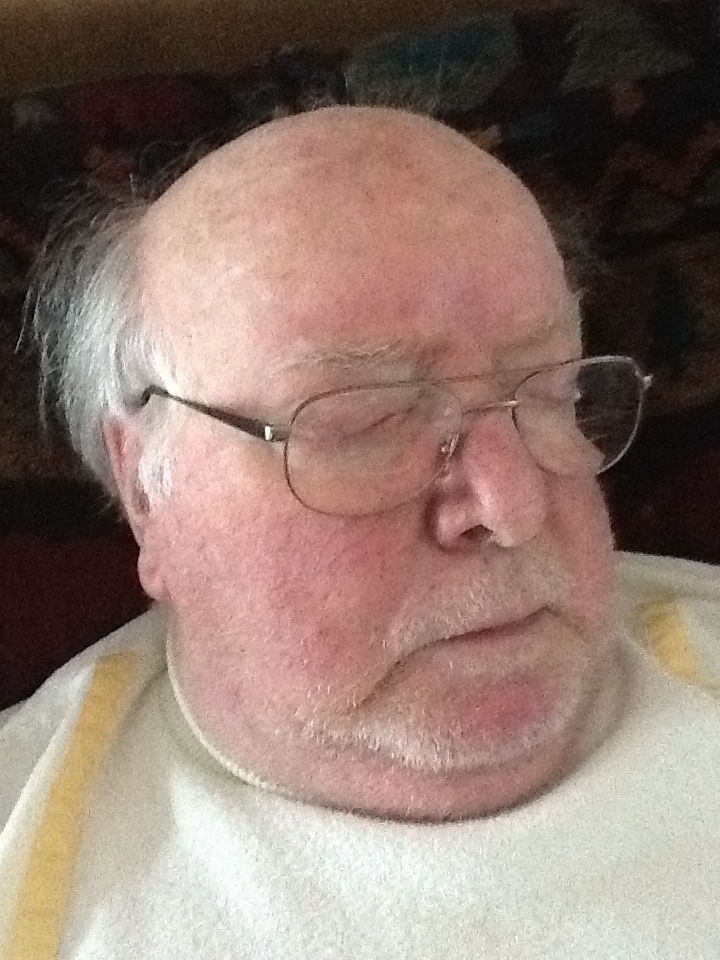
Movember is a movement I’ve joined to grow a moustache (and beard) and to raise funds for men’s health issues. 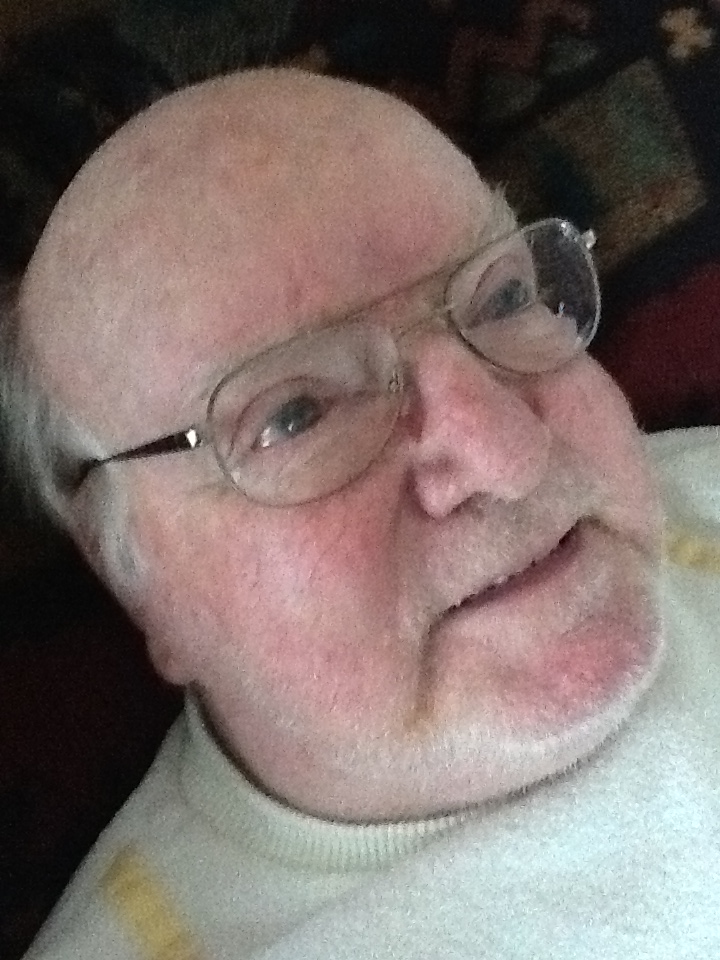 To prove that I really have started on this project I’m inserting a couple of photos my wife just took – she’s named them “Fuzzy napping” and “Fuzzy awake.”
The two main men’s health issues for Movember are awareness and research regarding prostate cancer and men’s mental health. Other issues of men’s health are also covered, including non-malignant skin cancer – and that’s mainly what caused me to want to participate. I have been undergoing treatment for numerous breakouts of non-malignant skin cancer growths on my head, face, ear, nose, etc. The reason for all these cancers goes all the way back to my time as a young airman serving in the Royal Air Force in Egypt during the pre-Suez crisis time (1951-53). I’ll quote from my autobiography “From Poverty to Poverty: A Scotsman Encounters Canada” to show you the connection.
“Our camp had a very high water tower, about a 120-foot climb, ‘Yours Truly’ decided to scale it one nice sunny day with a blanket over my shoulder. I laid the blanket on the roof of the tank, stripped absolutely bare and laid down on my back to get ‘nicely tanned all over,’ or so I thought. I was young and dumb enough at that time to ignore the fact that I’m a typical ‘Celt’ with a very ruddy complexion (described as ‘fresh’ on my military papers) and so, a tan for me was next to impossible. Anyway, I laid myself down and almost immediately fell asleep. I awakened approximately two hours later, burnt to a crisp! Ah, that bloody hot Egyptian sun!!!
“Unfortunately, I couldn’t report sick to get any treatment because all military personnel were classified as ‘government property.’ As I had damaged myself in my effort to get a sun tan, I could have been put on a charge and court-martialled for damaging government property! For days I walked about with my hands holding my pants legs out from my tortured thighs– even my ‘willie’ was sun burnt! It was terrible–even going for a pee was very painful.
“(I’ll never forget that episode in my life; doubly so because it left me with a condition called ‘Solar Keritosis’ in my later years–a pre-cancerous skin condition for which I now have to have regular sessions where my doctor freezes off the lesions, mostly on my head, with liquid nitrogen. Lately, I’ve had three surgeries to remove basal cell carcinomas from my scalp, on the tip of my nose and near my eye. Ever since, I always cover myself with long sleeves and a hat when in the sun. Just a wee bit too late!)”
I’ve just made a donation towards Movember health funds and invite you to do so as well. If you wish, you can join the initiative yourself as a Mo-bro or Mo-Sista or you can donate via my Movember site. The size of your donation depends on what you can afford, every little bit helps Movember to continue funding its world class programs. If you want to know more about what you’ll be helping to fund, you can visit http://ca.movember.com/about/funding-overview/.
Take a look at these statistics:
• 1 in 7 men will be diagnosed with prostate cancer in their lifetime
• This year 26,500 new cases of the disease will be diagnosed
• 1 in 5 men will experience a mental illness this year
- I will also add a statistic: There are about 230 non-melanoma skin cancers per 100,000 population in light colored skin as opposed to approximately 3.5 per 100,000 in darkly pigmented individuals. There are approximately four basal cell carcinomas to every one squamous cell carcinoma. The incidence has more than doubled in the last 20 years.
If you’d like to help make a change to these statistics, please donate. If you wish, go to my Movember site: http://ca.movember.com/mospace/5695601.
Writing Dialogue isn’t Easy
Writing Dialogue isn’t Easy. Please check out the referenced posting from Francis Guenette on her blog: “disappearing in plain sight – writing about writing”. I’ve also added the following comment with reference to the difficulty of writing dialogue.
Thanks for this post. It’s very true that writing dialogue isn’t easy. The particular “problem” I’ve encountered in writing dialogue in both my novel: “Beyond the Phantom Battle: Mystery at Loch Ashie” and my autobiography: “From Poverty to Poverty: A Scotsman Encounters Canada” was writing in the Scottish vernacular, as both books were set in Scotland (the latter partially so).
My editor, who is not Scottish-born, had quite a workout learning the spelling and nuances of my attempt to record written Scots-English. In fact, one computer program sent us the message that there were so many errors in spelling that we could not use the spell-check!!! In the novel, which uses the vehicle of time travel, I also had to try to convey that the Scottish persons my 21st Century heroes encountered when they found themselves somehow transported back to the 12th Century spoke in the Gaelic but the heroes, who didn’t speak or understand Gaelic, heard it as Scots-English and vice-versa. I chose to show the Gaelic, not by using that language, but by eliminating all contractions from their speech and using old-fashioned words or sentence structure whenever possible.
One reviewer remarked that he found the dialogue stilted and old-fashioned at times, not recognizing why I chose to use the differing speech patterns. On the other hand, another reviewer remarked that the dialogue read realistically for the most part and added, “Character personalities come through well in their speech, and you’ve managed to suggest the Scottish ‘lilt’ without overdoing it. I don’t know how you do it, but there’s a cadence to some of the speech that just seems to work. Very nice.” I can only conclude that some reviewers “get it” and others don’t. That probably goes for general readers as well. I now realize I should have addressed the difference in speech patterns in a preface to the book.
Having learned my lesson, I noted in the preface to my autobiography: “The reader will notice that I’ve used the Scottish vernacular when Scots are speaking amongst themselves and normal English when they are speaking with non-Scots. That reflects my own speaking pattern. When among Scots, my speech becomes increasingly ‘Scottish-sounding.’ For example, ‘Ah’ (I); ‘tae’ (to); ‘ye’ (you); ‘no’ (not); ‘canna’ (cannot);’ ‘oor’ (our); ‘widna’ (would not); ‘aboot’ (about); ‘aye’ (yes), etc. I’ve also used British words for the period before I emigrated from Scotland (such as ‘lorry,’ ‘chap,’ ‘bloke,’ and ‘cheerio’); and changed them to North American words sometime after I immigrated to Canada (such as ‘truck,’ and ‘guy’). My editor and I had a disagreement about allowing ‘Scottishisms’ (as she calls them) into my narrative. I insisted on leaving them in, however, for that’s how we (Scots) speak. Thus you’ll find the occasional sentence such as ‘So, there’s me, the great boatbuilder.’ instead of her ‘cleaned up’ version, ‘So, there I was, the great boatbulder.”
Where Are the Best Places to Write? (with thanks to Friesen Press)
I’ve just posted these remarks on my Facebook page  as a comment added to a posting by Friesen Press. Thanks to them for an interesting post which I’ve shared after my comments.
I’ve been writing from age 64 until age 79. Now that I’m 80 and in not-so-good health, I’m mostly writing in my head while waiting for my professional editor, who is also my wife, to get through editing a number of stories we haven’t yet published. I prefer writing at the computer at home in my den but then doing the re-writes (after my wife has given me her editing suggestions) in my zero-gravity chair out on the patio. Lovely! When the weather isn’t so nice, I write while relaxing in my living room recliner. Gayle tells me that I’ve taken to talking in my sleep. Maybe I’m concentrating on something more to write. She wrote down a quip I came up with a few weeks ago in the middle of the night. “I’ve got more to say than what I’ve got words for.” Another of my sage nighttime sayings was, “My drink needs some protection.” Perhaps that was a prediction of things to come. I’m just home from hospital after having six stones removed from the duct of an infected liver. Recovery could take a few months. Doctor says, “No alcohol for awhile.” Perhaps that’s good, because I find alcohol doesn’t help the writing.
Ian Moore-Morrans
Here’s the posting, courtesy of Friesen Press. Interesting reading.
Question: Where Are the Best Places to Write? Its Fall and time to take it outdoors a bit.
If a cork-lined room doesn’t happen to be available, where is the best place to write?
J.K. Rowling, Stephen King, Annie Dillard, and several other professional writers offer some advice.
Answer:
Virginia Woolf famously insisted that in order to write professionally a woman must have “a room of her own.” Yet French author Nathalie Sarraute chose to write in a neighborhood café–same time, same table every morning. “It is a neutral place,” she said, “and no one disturbs me–there is no telephone.” Novelist Margaret Drabble prefers writing in a hotel room, where she can be alone and uninterrupted for days at a time.
Where is the best place for writing? Along with at least a modicum of talent and something to say, writing requires concentration–and that usually demands isolation. In his book On Writing, Stephen King offers some practical advice:
If possible, there should be no telephone in your writing room, certainly no TV or videogames for you to fool around with. If there’s a window, draw the curtains or pull down the shades unless it looks out at a blank wall. For any writer, but for the beginning writer in particular, it’s wise to eliminate every possible distraction.
But in this Twittering age, eliminating distractions can be quite a challenge.
Unlike Marcel Proust, for example, who wrote from midnight to dawn in a cork-lined room, most of us have no choice but to write wherever and whenever we can. And should we be lucky enough to find a little free time and a secluded spot, life still has a habit of interfering.
As Annie Dillard found out while trying to write the second half of her book Pilgrim at Tinker Creek, even a study carrel in a library may supply distractions–especially if that little room has a window.
On the flat roof just outside the window, sparrows pecked gravel. One of the sparrows lacked a leg; one was missing a foot. If I stood and peered around, I could see a feeder creek run at the edge of a field. In the creek, even from that great distance, I could see muskrats and snapping turtles. If I saw a snapping turtle, I ran downstairs and out of the library to watch it or poke it.
(The Writing Life, Harper & Row, 1989)
To eliminate such pleasant diversions, Dillard finally drew a sketch of the view outside the window and then “shut the blinds one day for good” and taped the sketch onto the blinds. “If I wanted a sense of the world,” she said, “I could look at the stylized outline drawing.” Only then was she able to finish her book.
So where is the best place to write?
J.K. Rowling, author of the Harry Potter series, thinks that Nathalie Sarraute had the right idea:
It’s no secret that the best place to write, in my opinion, is in a café. You don’t have to make your own coffee, you don’t have to feel like you’re in solitary confinement and if you have writer’s block, you can get up and walk to the next café while giving your batteries time to recharge and brain time to think. The best writing café is crowded enough to where you blend in, but not too crowded that you have to share a table with someone else.
(interviewed by Heather Riccio in HILLARY Magazine)
Not everyone agrees of course. Thomas Mann preferred writing in a wicker chair by the sea. Corinne Gerson wrote novels under the hair dryer in a beauty shop. William Thackeray, like Drabble, chose to write in hotel rooms. And Jack Kerouac wrote the novel Doctor Sax in a toilet in William Burroughs’ apartment.
My favorite answer to this question was suggested by the economist John Kenneth Galbraith:
It helps greatly in the avoidance of work to be in the company of others who are also waiting for the golden moment. The best place to write is by yourself because writing then becomes an escape from the terrible boredom of your own personality.
(“Writing, Typing, and Economics,” The Atlantic, March 1978)
But the most sensible response may be Ernest Hemingway’s, who said simply, “The best place to write is in your head.”
 MOOMOR PUBLISHING