And they didn’t live Happily ever after … An Alzheimer Story

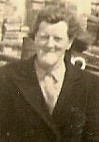
Yesterday our community in Vernon, British Columbia, observed a Walk for Alzheimer Research and for those who are living with Alzheimer Disease and their families. The Ukeleles for Fun band for which I usually play percussion performed for the walkers as they rounded the arena track. I wasn’t able to participate this year as I had an important commitment at my church, but I was there in spirit. I also contribute regularly to the Alzheimer Society’s research campaign and have been doing so for many years. I urge everyone to consider regular donations of whatever they can afford to Alzheimer research. The main reason I am so committed to this worthy cause is that my late husband, Gus Johannesson, had early onset AD, was diagnosed at age 58 and died four years later. At the time of his diagnosis our children were 12 and 17 years’ old. Now my present husband, has been diagnosed with mild cognitive impairment and is getting some help from an Alzheimer drug that wasn’t available when Gus needed it back in 1992. It is not a cure, but can hold off many of the complications from AD for a length of time. I’m hoping and praying that a cure may be found in the near future. In remembrance of Gus, I am sharing a copy of the letter that Alzheimer Manitoba asked me to write for their 1994 campaign.

Gayle Moore-Morrans


Alzheimer   Manitoba     
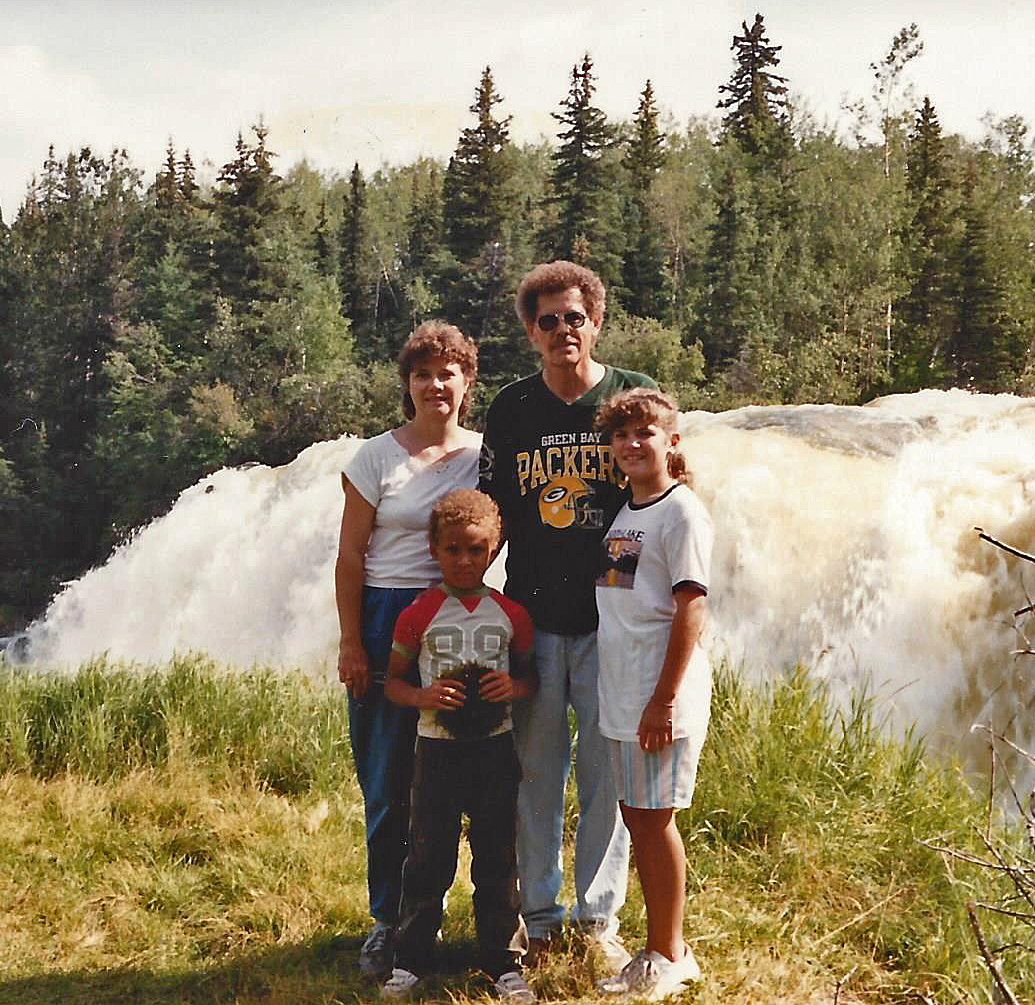
Johannessons at Pishew Falls MB 1988

And they didn’t live Happily ever after . . .

November 7, 1994

Dear Friends,

This September my husband Gus turned sixty. We wanted to celebrate as many families do, but the plans for our party were a bit different. His 60th “Toast and Roast” became the retirement party he never had and an affirmation of what he has meant to his family and friends while he is still able to appreciate it.

On the day of festivities we presented him with a book of remembrances gathered from friends and relatives around the world. This book is a tribute to Gus’s life as well as a tool for memory as he copes with his illness.

Two years ago Gus was diagnosed with Alzheimer Disease. I can’t say that our lives immediately changed. The disease doesn’t change your life overnight, but has over a number of years changed every aspect of our lives. To date, the cause of AD is unknown, there is neither cure nor definite treatment; it is progressive and will eventually be terminal.

It is incredible the emotional upheaval we all have been through these past years. All four of us have had counselling and hope that it remains available whenever we need it. The family has found comfort, relief, professional information and fellowship in support groups for adult caregivers, a children’s support group, the early stage support group, numerous educational sessions, and from Alzheimer staff and volunteers.

The Alzheimer Society of Manitoba has been able to provide these services because of people like you. I am happy to have this opportunity to personally thank you and let you hear firsthand how meaningful your help is for my family and many others.

It took a long time to really recognize that something serious was happening as Gus has always been a bit of the “absent-mined professor” type and we just figured he was getting more-so with age. This is not the situation. A man admired for his keen mind, having studied at the doctoral level in systematic theology has now forgotten how to tie a tie or manage the simple task of handling a sandwich. In happier days Gus was a Lutheran pastor giving support and guidance to others. Today he is on the receiving end.

Alzheimer Disease attacks the whole family. We are all hurting, angry, frustrated, scared; dealing with a tremendous loss.

Your roles change. I have had to become in as many ways as possible mother and father to my children and husband, directing all my energies outside of the workplace to the family. The children and I have become caregivers, not easy for an adult, let alone a twelve-year-old and seventeen-year-old. A caregiver’s day is often referred to as the “36-hour day.” That is how we live, each and every day.

As is typical with early AD, symptoms come and go resulting in good and bad days. So far Gus’s skills that are totally gone are writing, public speaking, driving, anything mathematical, and many deductive reasoning processes.

We thank God for the good days, for the patience that we are learning, for on-going medical research, for the help offered by the Alzheimer Society and most of all, for the prayers, love, help and support of family and friends.

Our family includes you when we say “Friends.” You probably don’t know us personally, but as a supporter of the Alzheimer Society you help make each and every day a little bit brighter, a little bit easier.

Once again, thank you for making our lives happier. Please continue your needed support. It is your caring and generosity that makes the difference!

With our sincere appreciation,

Gayle Johannesson

P.S. The number of families coping with the devastating reality of Alzheimer Disease is expected to at least double in the next decade.
 

A Scorpio Versus Scorpions

The following story was written by Gayle about an unfortunate incident she experienced during her and Ian’s time living at their house in Chapala, Mexico in 2006.

A Scorpio Versus Scorpions          ScorpionVectorImageVP

Scorpio may be my sign of the Zodiac, but that’s really all I ever wanted to have to do with the creatures!

One March evening during our sojourn in Mexico we had just enjoyed a long moonlit soak in the hot tub when about 10 p.m. Ian went inside to refresh our drinks. I took advantage of his absence to get out my foam exercise “noodle” and do my daily aqua sit-ups.

(Little known to me, there must have been a “wee creepy” sleeping in the hollow inside of the noodle, which decided to join me for his or her water exercises!) I had just put the noodle aside when I noticed what I thought was a floating begonia flower that had likely dropped from a planter hanging over the pool. Instead of picking it up with our pool sieve, I stupidly went to scoop it out with my hand and it stung me on the middle finger! Practically blinded by the pain, I slapped my hand down on my thigh and got two more stings before flinging it over the edge of the tub. Then, with terrible burning sensations in both finger and thigh, I (in Ian’s words) “came out of the pool like a tsunami and screaming like a banshee!”

There was no question in our minds that I had encountered a very startled scorpion – and we weren’t about to look for it to verify our suspicions. We quickly dried off, got dressed and within a few minutes were off to the 24-hour Red Cross clinic at the other end of Chapala.

By the time we got there (about 15 minutes later) it felt as if my entire arm and upper leg were on fire, my tongue was feeling “funny” and my lips were numbing, but luckily I had no swelling. I was rushed into a ward, put onto a bed and hooked up to an IV within a few minutes. Then came two huge syringes about 5 inches long and one inch in diameter. The combination of antihistamine and steroids gradually rid me of the mouth-numbing sensations but the excruciating stinging just kept up.

About an hour and a half later I was released and we motored off to the nearby town of Ajijic, which has the only nearby 24-hour pharmacy, to fill a prescription for pain pills (which, incidentally, didn’t seem to me to help much).

It was then midnight. I attempted to sleep but was so miserable and restless I knew Ian would get no sleep if I stayed in bed, so I went upstairs to our den with a window wall overlooking the lake and distant mountains and read through the night as best I could. The pain finally left my thigh (which sported two ugly red welts) by the following evening. The pain in the arm started to abate that first night but the finger itself just kept up that fiery stinging sensation for about 36 hours, although only a slight prick marked the spot. For the next couple of weeks my finger was totally numb; then, very slowly the feeling started coming back.

Two months later, I just had a very slight numbness at the tip of the finger. A doctor friend of ours prescribed a “second generation antihistamine” tablet to keep on hand at all times. He says any subsequent scorpion sting would probably result in an even worse and quicker reaction so it’s important to be prepared and, before heading for a clinic, to take the medication.

We’ve read that the scorpions in our area are only “semi-deadly”, that on a scale of one to four they are only a “two.” Imagine what a number “four” could do! (We’ve also heard of a local woman who died from a scorpion sting because she didn’t get medical help!)

Need I say that, ever since, I’m very careful to check my noodle before doing any exercises? And I steer clear of any scorpion I see, letting Ian zap them on sight. We continue to find the occasional dead one in the house, but Ian’s monthly spraying seems to get the critters before they get very far. Considering this encounter and others we’ve had with “wee critters” in Mexico, we don’t think we were cut out to be “southerners!”

Exercising with my noodle on a non-scorpion evening.

Exercising with my noodle on a non-scorpion evening.

100_0351

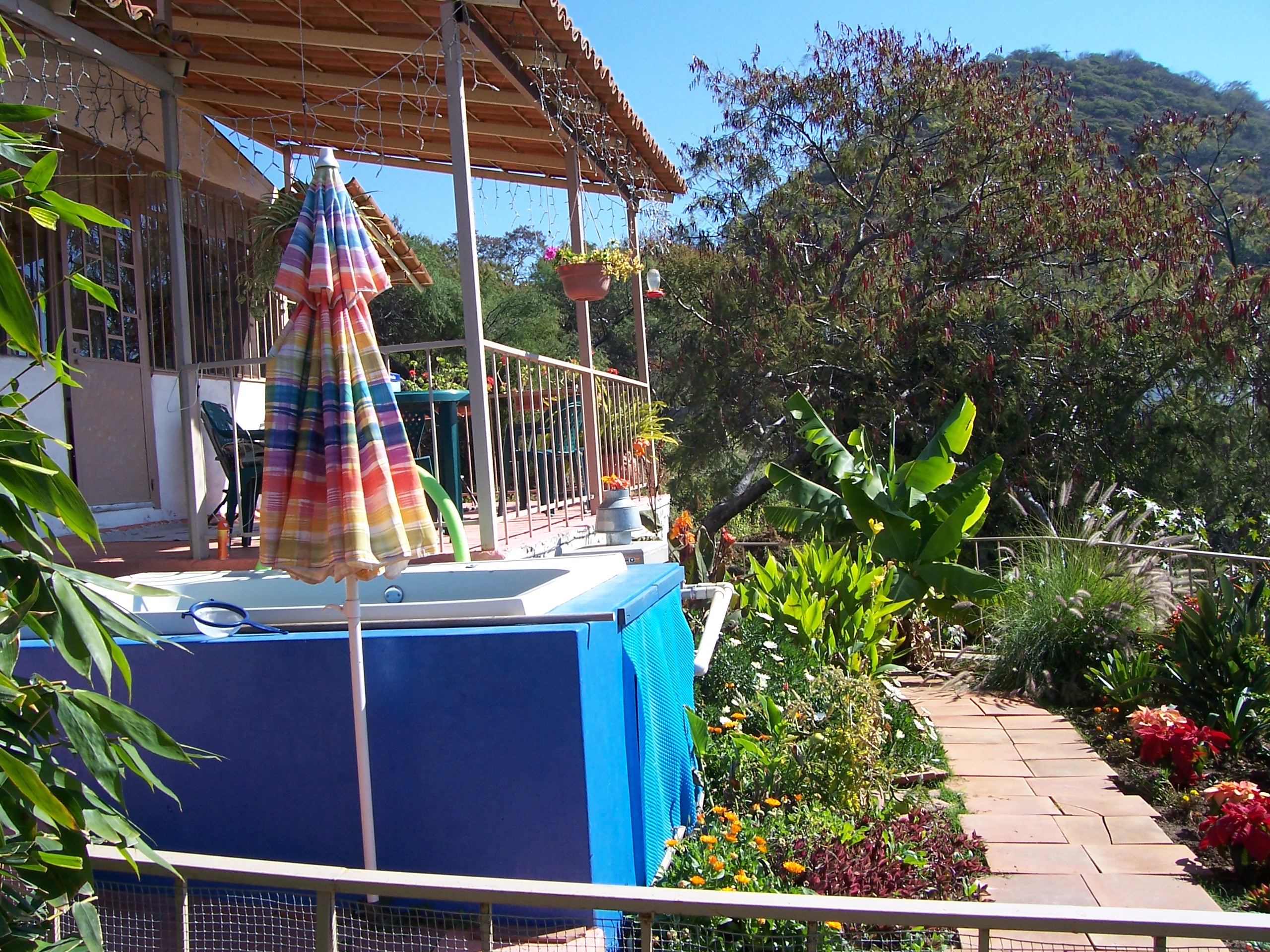
Our hot tub, garden and surroundings in Chapala, Mexico


Celebrating Mothering and Grandparenting

As Mother’s Day approaches I’m enjoying so many uplifting and poignant messages on Facebook regarding motherhood, as well as savouring the sight and smell of flowers that were just delivered to me from my daughter who lives with her husband and children in Norway. I’m also anxiously awaiting a call from my son who lives in California and hearing from my step-daughters in Manitoba. Yes, they are all too far away from our British Columbia home, but I guess that is a common situation in present-day life. Thank God for the modern convenience of Facetime so that we can regularly communicate and even see each other on my ipad and their iphones. (My son and I regularly go for a “walk” in the garden he maintains for the house he lives in and down to the nearby beach to check out the sand and surf.) Since Ian and I live in a popular retirement spot, many of our friends here also have children and grandchildren who are residing in other corners of the earth. Through Skype, Facetime and the like, they also manage to communicate and keep up with distant family members with the occasional long-distance flight to touch base in person.

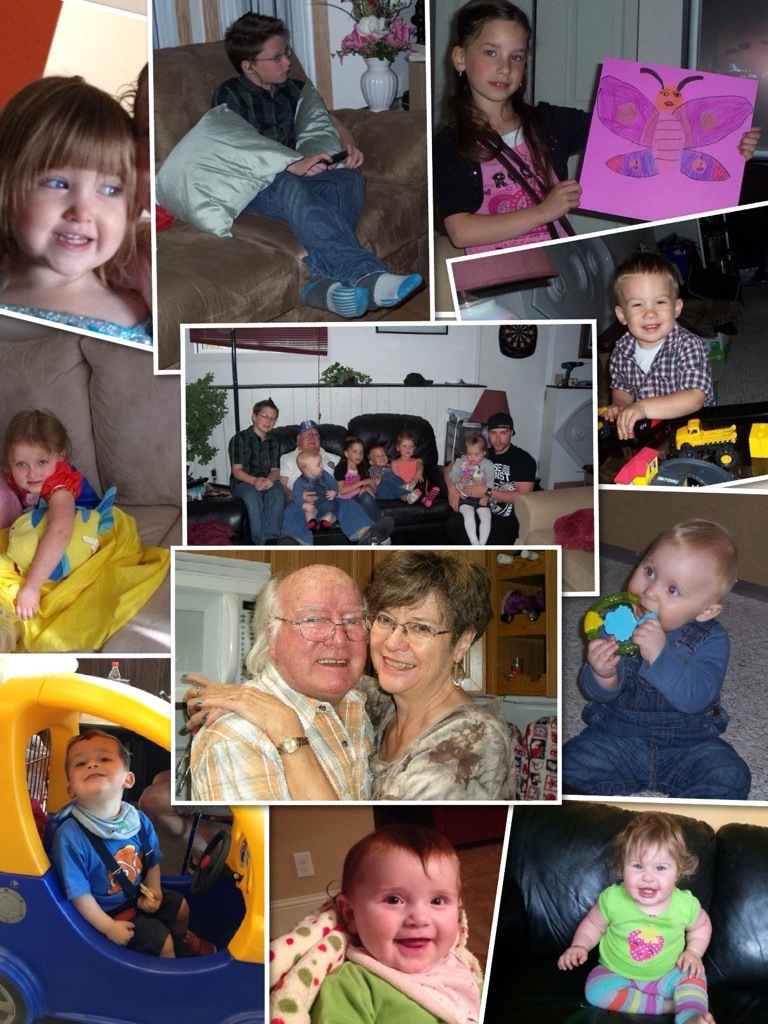
I’m sharing a Pic Collage photo I compiled on my ipad to commemorate our great-grandchildren and two youngest grandchildren – the youngsters (or “wee’uns,” as Ian would call them in his Scottish vernacular) – the children in our lives who live far away from us (in Saskatchewan, Manitoba and Norway) for whom we are Grandpa and Grandma and to whom we will be dedicating our children’s chapter book, “Jake, Little Jimmy and Big Louie,” for which I am presently doing the layout. Here they are: going around clockwise from the top center: Leland, 13 (our age-appropriate consultant for the book); Hannah, 8 (who did the drawings for the book); then Logan, 4; Brayden, 2; Lexi,2; Eva, 9 months; Gustav, 3; Caleigh, 6; and Madison, 4.  (We also are expecting two more great-grandchildren later this summer. The two photos  in the center show Grandpa Ian at his 80th birthday party in Winnipeg with six of the great-grandchildren and one grandson (Calan) whose daughter wouldn’t pose without him; plus the bottom photo of Ian and me on our 7th wedding anniversary at home in Vernon, September 7, 2010 (on the day he had his heart attack, mind you!)

photo (2)

My husband Ian (the author) just turned 82 last week and is presently in a local care home for a 2-6 week “short stay convalescent care program” to help him regain some strength, balance and walking ability after over five years of serious illness and lots of medications which have saved or bettered his life but also are essentially poisonous and have lots of nasty side-effects, the worst of which has been neuropathy in the feet. I’m happy to say that a set of new orthotics plus the exercises, physio- and occupational therapy he is receiving daily is helping. I’ve seen a lot of progress in just a few days that he has been there.

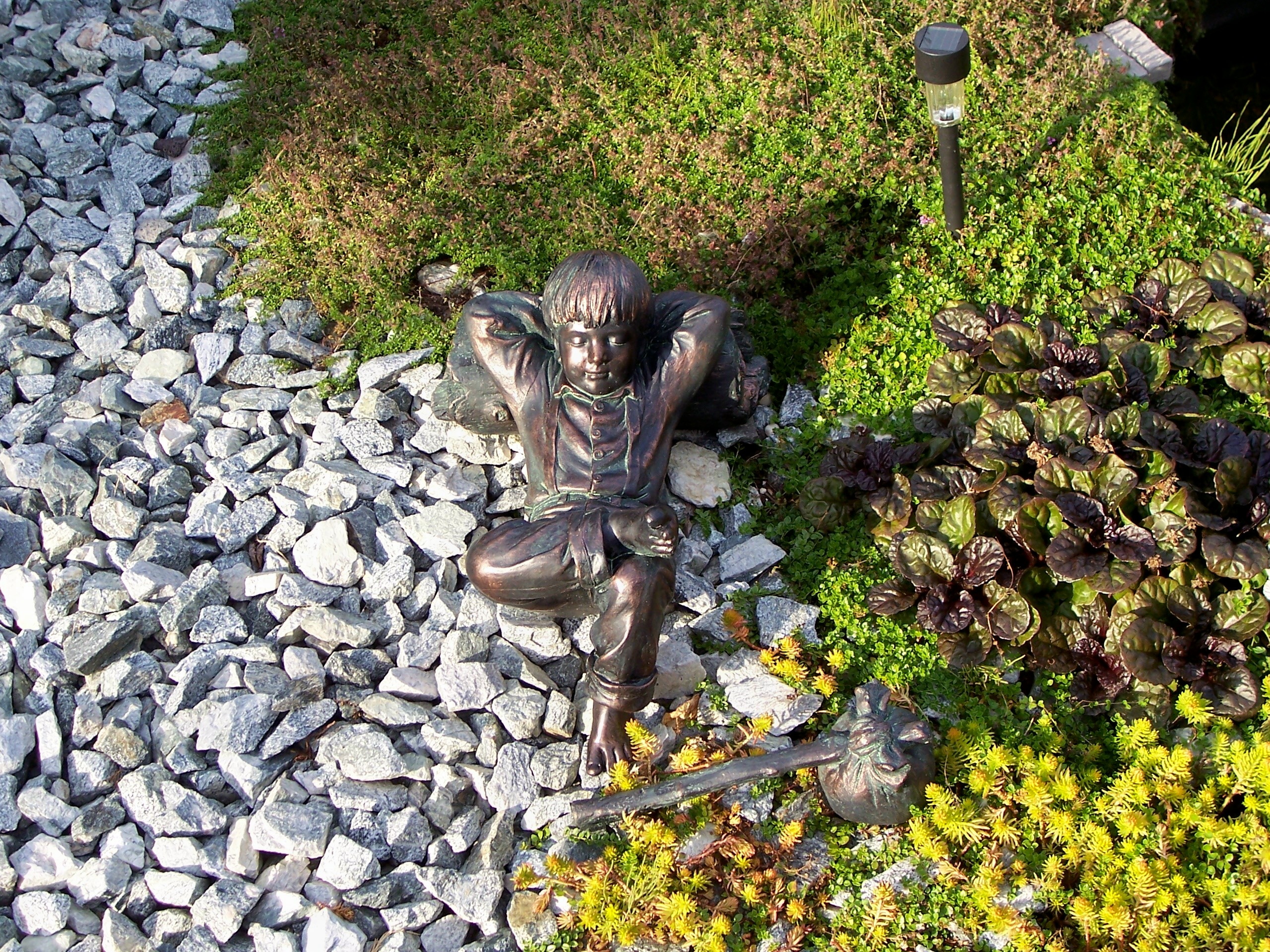
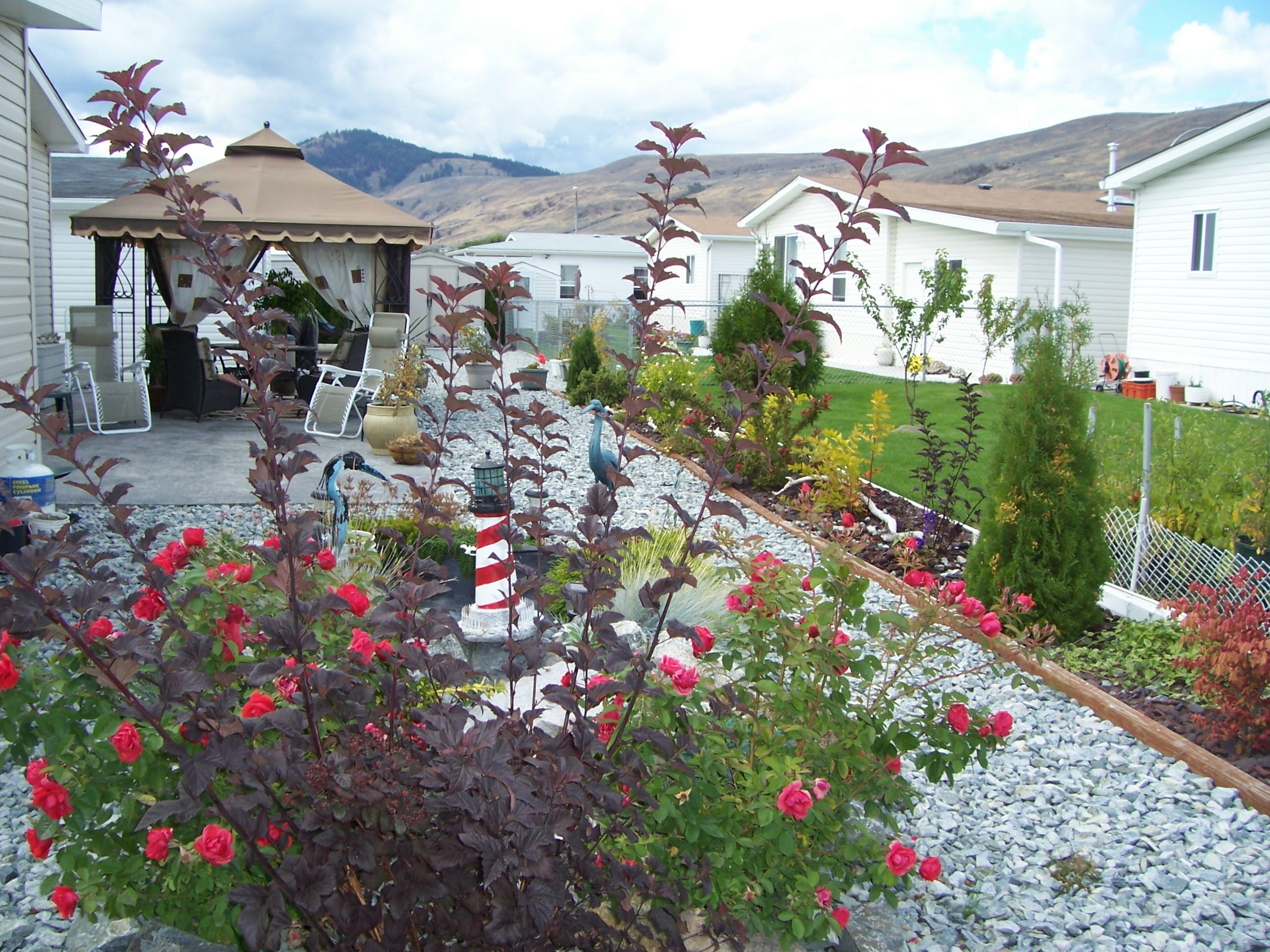
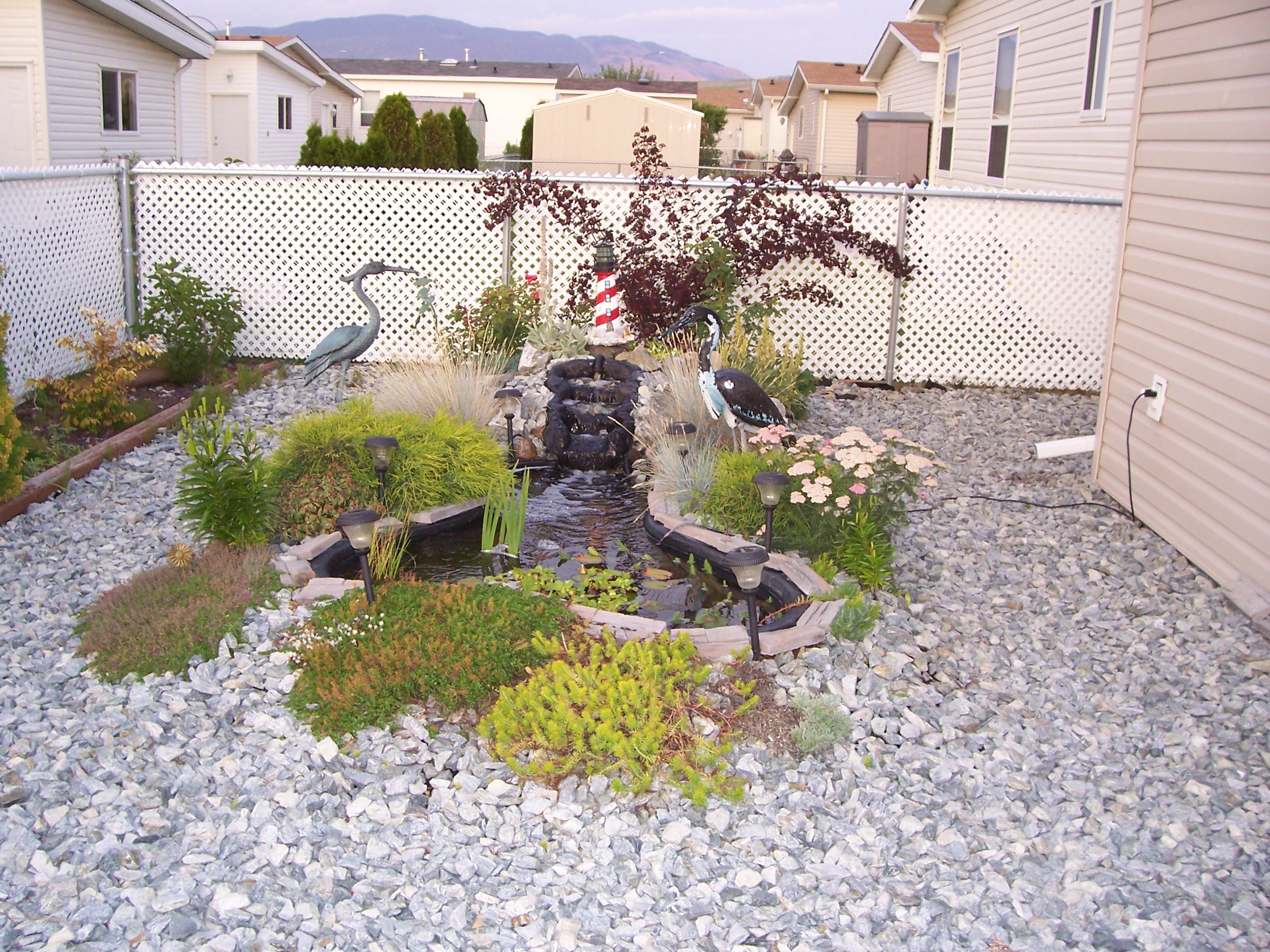
In the meantime I’m enjoying some time alone at home with only the dog to take me away  from gardening and layout duties. Misty supervises me as I plant flowers in boxes and pots on our front porch, prune the shrubs in our front and back xeroscaped gardens, get the gazebo canopy and curtains set up and hire a worker to come in and clean out our pond and waterfall. I did the latter for the first time last year and could hardly stand the sight and stench of an about-two-inch layer of rain worms that had crawled into and died in the pond at the end of last autumn, during part of our mild winter and then so far this spring. I realize they are also God’s creatures, but they are ones I’d just as soon not encounter. I’ve also included some photos of our back yard from last year to share some of the beauty of our surroundings. The first photo is of my “Benjamin memorial” to remember my infant grandson who died in 2011 in Norway at 13 days old, the day after I had arrived there. The other photos show our xeroscaping, gazebo, pond and waterfall. Hopefully, Ian will be home soon to enjoy it all as well.

Benjamin memorial 1 in my garden

Backyard-Another view Patio-pond and Waterfall

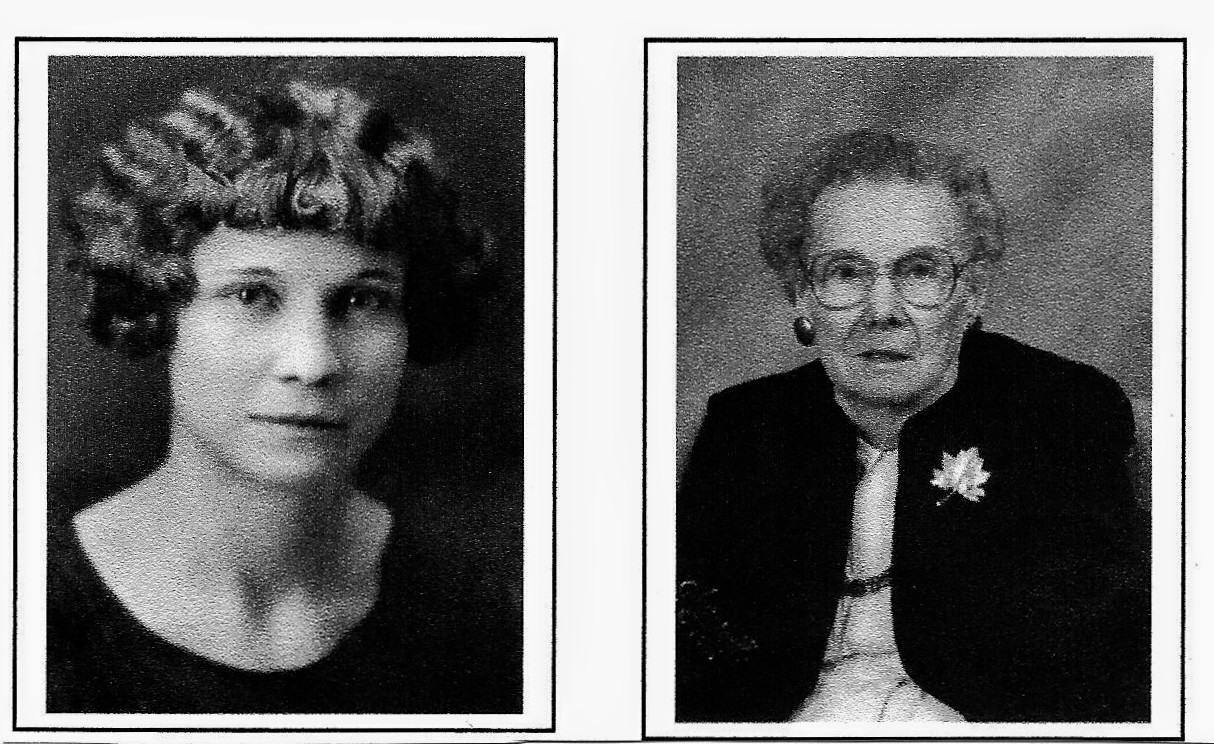
We also wish to remember and honour our own mothers who passed away in 1995 at the ages of 86 (Ian’s) and 96 (mine) in 2001. Their birthdates were within a day of each other but a few years apart: Chrissie’s on June 15 (1909) and Mil’s on June 16 (1905).

Chrissie Morrans Moorhead

Ian’s mother, Christina Morrans Moorhead, known  as “Wee Chrissie” and to her grand- daughters as “Campbeltown Gran.”

                   OUR MOTHERS

Mildred Nelson Moore at 20 and 90

Gayle’s mother, Mildred Nelson Moore at ages 20 and 90, known as “Mil” and to her grandchildren as “Grandma Mil.”


Happy Mother’s Day to all mothers on your special day on Sunday, May 11th. After church, my friend Jean (whose children are also far away) and I plan to drive up to our neighbouring Davison’s Orchard Farm, have Mother’s Day luncheon at Auntie May’s Cafe and enjoy a walk through the blossoming apple, pear and peach trees before our dog, Misty, and I go to visit Ian. Sounds like a fun day!

Gayle Moore-Morrans

An Old Married Couple: Reblogging “Date Night and the Wind Turbines”

An Old Married Couple: Reblogging “Date Night and the Wind Turbines”

Wonderful post. Thanks to Jen Groeber for reminding us that we are “an old married couple, late in life, on date night; enduring, steadfast, everlasting, beloved.” Words to cherish even in the midst of a what seems at times like endless illness and care-giving. Love prevails and God is always there with a steady comfort and helping hand.

jgroeber's avatarjen groeber: mama art

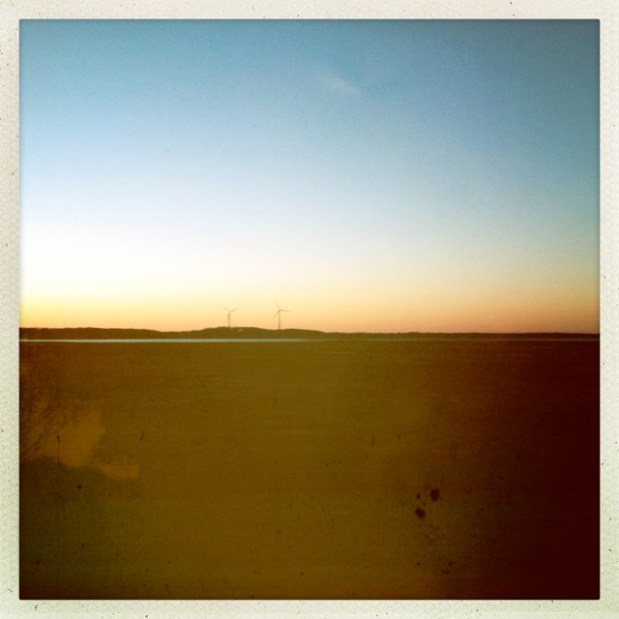
IMG_9780 Wind turbines, out of focus
April 2014

I’ve been thinking about marriage lately. It may be the spring weather (finally), the birds looking for love in all the wrong places, mating for life and so on.

I think it’s the time in my life too, or our collective lives really. Among our friends our kids are mostly all in school (and by school I don’t mean clown school or college, I mean pre-school) and our parents are aging, looking to move, getting the scan or the X-ray or the biopsy. Some have even passed. We are the next “big” then, the next big mortal, permeable, vulnerable thing.

And I began thinking about marriage, how it’s so often like breathing or an old car or not throwing up.  It’s one of those things that you’re really not all that grateful for, at least not until it’s jeopardized, by illness or disregard…

View original post 623 more words

BEQUEATHING OUR HEIRLOOMS – A BLENDED FAMILY’S SOLUTION AND AN AUTHOR’S SOLUTION

Heirloom bone 001

*Heirloom = (1) Any piece of property that goes to an heir as part of an estate; or

(2) Any treasured possession handed down from generation to generation.

             (* from New World Dictionary of the American Language, Second College Edition)

We hope to avoid any  haggling over the “heirloom bones” by our descendents after we have passed away. Just reading about what is going on now in South Africa over the literal bones of Mandela’s relatives and, probably, over Mandela’s eventual burial place gives us the creeps. That news has been timely as we’ve immersed ourselves in research and discussions about end-of-life decisions this past month. Being a blended family brings some unique considerations to the fore. Both of us were previously widowed after long first marriages and have now been married to each other for almost ten years. At 70 and 81 years of age, having both experienced some serious health crises in the last several years, we found that it was time to re-do our wills and also to complete Enduring Powers of Attorney (granting financial control to a trustee if we became incapable of handling our affairs) and Representative Agreements (the name for “living wills” or end-of-life directives in our province of British Columbia).

This brings up a special problem that many blended families face, especially those of us who had a second marriage later in life, have grown children (grandchildren and even great-grandchildren) from our previous marriages and have brought a significant amount of “items” into our joined household from our previous households.  What happens to those items we each brought into the marriage, especially those items that one would consider a family heirloom? Normally, if one spouse dies, everything remains with the surviving spouse. However, for us, we needed to consider what would happen to the “Morrans family items” for instance, if Ian should die and Gayle survive? Or what would happen to the “Johannesson family items” if Gayle should die and Ian survive? These items do not have a great financial value; however, we and our families attach a great deal of sentimental value to them. Our solution was to specify in our wills that when each of us dies, those items that were brought into our marriage from the previous marriage be given to our own children from that marriage at the time of our death and not be retained by the surviving spouse. We feel that can avoid potential problems for all parties in the future.

A second problem was what to do about copyrights that belong to an author of published or unpublished works when that author dies. Thirdly, because Gayle has specific religious concerns, she also wanted to completely plan out her funeral and we both wanted to leave specific instructions for disposal of our bodies. We will share our solutions to the blended family problem first.

When we married in September 2003, Ian had been retired for several years but Gayle was still working, not yet having reached retirement age. She continued to work until taking an early retirement in July 2004. We had sold Ian’s house just after our marriage and Ian had moved into Gayle’s house with some of his furniture and household items but had given a lot of such items to his family members who lived in the same town. We had bought a large motor home and planned to drive it to Mexico to see if we wanted to retire there permanently. Thus, we decided to sell most of the furniture and household items, retaining those most important to us which we put into storage, intending to have it sent to Mexico if we decided to stay there permanently. After a year we decided that we preferred to return to Canada but to another province where the weather was more desirable. It took another year and a half to get organized, put our Mexican house up for sale and finally sell it. Now, here we are in British Columbia with a house full of “his”, “hers” and “our” stuff. We wanted to be sure that the “his” and “hers” stuff would eventually be given to “his” or “her” appropriate family members.

Gayle worked for several long days going through everything and making two lists of the appropriate items. Then we worked together to designate how the items would be divided amongst our various family members.

This is the wording with which we began our list:

LIST OF ARTICLES AND BENEFICIARIES* – For Wills of Gayle & Ian Moore-Morrans
*This is an addendum to the Wills of Gayle Irene Moore-Morrans and Ian
Moore-Morrans. We are listing only those items that we wish to bequeath 
which we each brought into our marriage in September 2003 from the families
of Gayle Irene Moore Johannesson and Ian Morrans. Any items not listed here 
are to be considered Moore-Morrans estate residue. A list of family members 
to whom we wish to bequeath these items is on page X.

The following headings were listed at the top of each page:

ITEMS          FAMILY  ITEMS               BENEFICIARY         LOCATION
            Johannesson  Morrans

The following categories were used to list the items:

FURNITURE
CARPETS & FLOOR COVERS
HOUSEHOLD LINEN
CLOTHING & SHOES
DISHES, CHINA, FLATWARE, SERVING PIECES
JEWELRY/WATCHES
ARTWORK
HEIRLOOMS
COLLECTIONS (BOOKS, COINS, CDS, DVDS, ETC.)
TOOLS

At the end we listed the designated recipients of each family’s heritage item and their family relationship to us plus their date of birth:

Example:

Daughter of Gayle Moore-Morrans: Jane Ann Doe, neé Johannesson, DOB Jan 00, 1977

On another subject, that of choosing our trustees (for the wills) or attorneys (as our representative is listed for the Enduring Powers of Attorney) or “representative” (for the Representation Agreement), we decided to each list each other as first trustee/attorney/representative and then, if we were unable to act for the other as in the case of death or disability, to name Ian’s son-in-law for him and to name a local friend for Gayle as she has no direct relatives in Canada.

As a proper Lutheran Celebration of Life (funeral) is important to Gayle, she has also added as an addendum to her will complete instructions for such a service plus a service of committal and disposal of her body.

Ian has left the choice of funeral or memorial service and disposal of his body to Gayle, if she survives him, and to one of his daughters should Gayle not survive him.

We both have included in our wills instructions that our bodies be cremated and have designated appropriate urns to be used from Gayle’s vase collection.

As Ian has published a number of works and written a number of others which he hopes to publish, his will designates that all copyrights, including moral rights, to all his published and unpublished works as defined in the Copyright Act, RSC 1985, c D-42, be transferred to Gayle or, if she does not survive him for 30 days, then to his daughters in equal shares or to their children if one or both of his daughters do not survive him. A list of his published and unpublished works is added as an addendum to his will.

We want also to point out a particular blogger who has two very informative sites about end-of-life topics which we have found valuable. Julie Hall’s two sites are:

http://www.estatelady.wordpress.com The Estate Lady Speaks: Compassionate Advice for Dealing with a Lifetime Accumulation of Stuff

http://www.alzheimercaregiver.wordpress.com In the Trenches: The Alzheimer’s Support Blog for Caregivers