SHARING SOME PHOTOS FROM IAN’S AUTOBIOGRAPHY, “FROM POVERTY TO POVERTY:

This slideshow requires JavaScript.

(Gayle, Ian’s wife and editor here.) I decided to share some photos from Ian’s autobiography on this site. Though I wasn’t in the picture, so to speak, for any of these, it was my task to choose them from Ian’s pile of photos, scan and adjust them for the book. That was quite a feat for Ian’s photos from Egypt, of the Campbeltown Pipe Band and of his parents which were taken with the camera he purchased in Egypt. The existing photographs were just a little bigger than a large postage stamp, so it was a challenge to scan and save them to a size that could be printed in the book.  Since Canadian Remembrance Day and the USA’s Veterans’ Day has just passed, we’ve been inundated with photos of military men from the past. Ian’s are from the pre-Suez Canal crisis days in the UK and Egypt (1950-1954). He says he was in the Royal Air Force when they were “feeding them, not needing them.”

Today, November 15th,  we are giving a book reading and discussion at Vertigo Gallery in Vernon BC, as part of their weekly November series “Vertigo Voices.” Ian will be reading from his autobiography “From Poverty to Poverty: A Scotsman Encounters Canada” and we’ll be answering questions and discussing the book and the process of writing a memoir.

Reblogging Editing – The Never Ending Story

Editing – The Never Ending Story. My sympathies on the seemingly never-ending re-reads of a manuscript to try to capture that last typo, misspelling, etc. My professional editor wife who edited and proofread my manuscript with Friesen did miss a few things which we only discovered after the publication and after many, many times going over the manuscript. Ah, well, it seems that almost any book we read nowadays contains one or several “mistakes” – my wife even encountered a typo in a published Bible that she was using at her former workplace. Good luck in your final, final proofing. It’s a good idea to have several others go through the manuscript as well. Sometimes we get so used to our own writing or editing that, as you say with your word “just”, things just pass us by as if they weren’t there. It sounds like you are about to complete the task soon. Best wishes in this daunting task.

Why I’m Participating in MOVEMBER

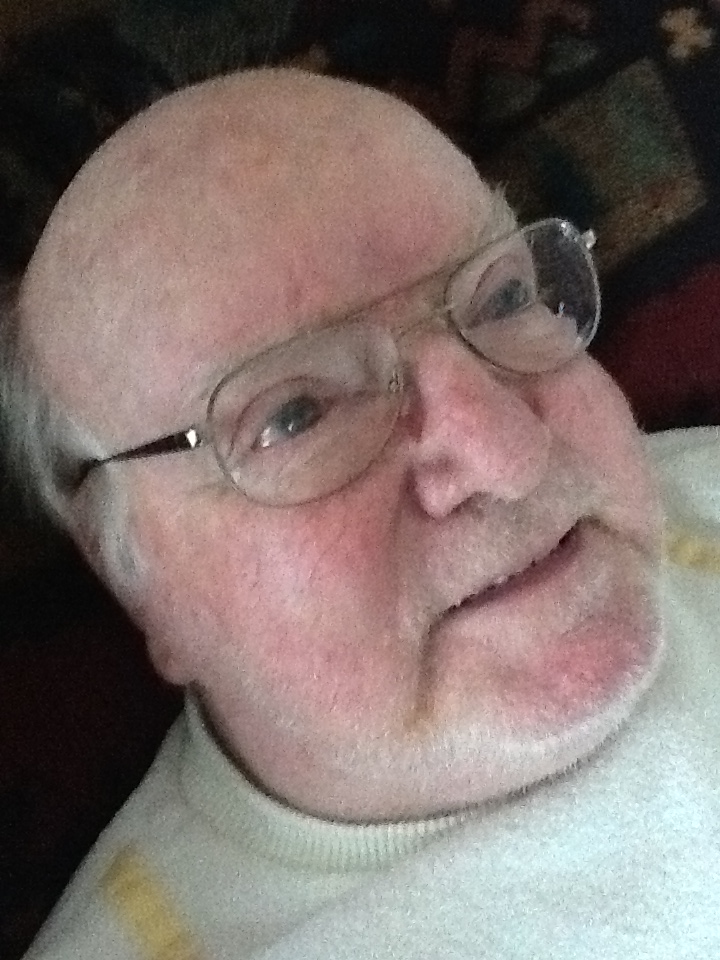
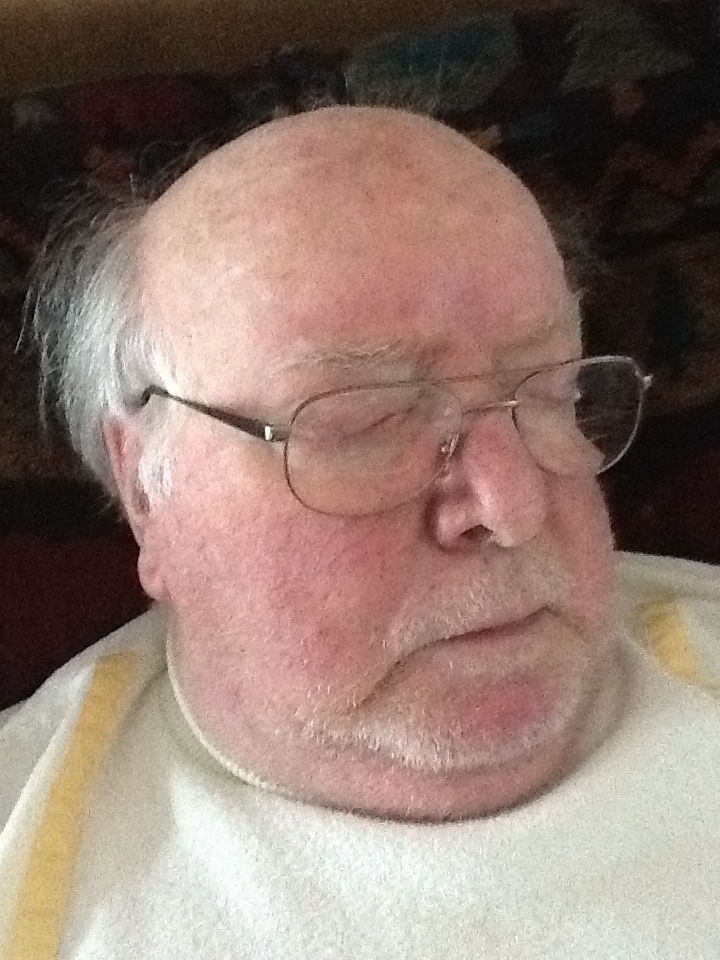
Movember is a movement I’ve joined to grow a moustache (and beard) and to raise funds for men’s health issues. To prove that I really have started on this project I’m inserting a couple of photos my wife just took – she’s named them “Fuzzy napping” and “Fuzzy awake.”
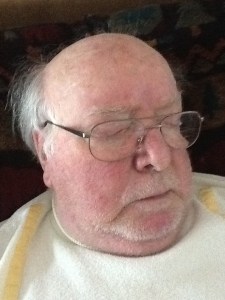
The two main men’s health issues for Movember are awareness and research regarding prostate cancer and men’s mental health. Other issues of men’s health are also covered, including non-malignant skin cancer – and that’s mainly what caused me to want to participate. I have been undergoing treatment for numerous breakouts of non-malignant skin cancer growths on my head, face, ear, nose, etc. The reason for all these cancers goes all the way back to my time as a young airman serving in the Royal Air Force in Egypt during the pre-Suez crisis time (1951-53). I’ll quote from my autobiography “From Poverty to Poverty: A Scotsman Encounters Canada” to show you the connection.

“Our camp had a very high water tower, about a 120-foot climb, ‘Yours Truly’ decided to scale it one nice sunny day with a blanket over my shoulder. I laid the blanket on the roof of the tank, stripped absolutely bare and laid down on my back to get ‘nicely tanned all over,’ or so I thought. I was young and dumb enough at that time to ignore the fact that I’m a typical ‘Celt’ with a very ruddy complexion (described as ‘fresh’ on my military papers) and so, a tan for me was next to impossible. Anyway, I laid myself down and almost immediately fell asleep. I awakened approximately two hours later, burnt to a crisp! Ah, that bloody hot Egyptian sun!!!

“Unfortunately, I couldn’t report sick to get any treatment because all military personnel were classified as ‘government property.’ As I had damaged myself in my effort to get a sun tan, I could have been put on a charge and court-martialled for damaging government property! For days I walked about with my hands holding my pants legs out from my tortured thighs– even my ‘willie’ was sun burnt! It was terrible–even going for a pee was very painful.

“(I’ll never forget that episode in my life; doubly so because it left me with a condition called ‘Solar Keritosis’ in my later years–a pre-cancerous skin condition for which I now have to have regular sessions where my doctor freezes off the lesions, mostly on my head, with liquid nitrogen. Lately, I’ve had three surgeries to remove basal cell carcinomas from my scalp, on the tip of my nose and near my eye. Ever since, I always cover myself with long sleeves and a hat when in the sun. Just a wee bit too late!)”

I’ve just made a donation towards Movember health funds and invite you to do so as well. If you wish, you can join the initiative yourself as a Mo-bro or Mo-Sista or you can donate via my Movember site. The size of your donation depends on what you can afford, every little bit helps Movember to continue funding its world class programs.  If you want to know more about what you’ll be helping to fund, you can visit http://ca.movember.com/about/funding-overview/.

Take a look at these statistics:
•    1 in 7 men will be diagnosed with prostate cancer in their lifetime
•    This year 26,500 new cases of the disease will be diagnosed
•    1 in 5 men will experience a mental illness this year

  •  I will also add a statistic: There are about 230 non-melanoma skin cancers per 100,000 population in light colored skin as opposed to approximately 3.5 per 100,000 in darkly pigmented individuals. There are approximately four basal cell carcinomas to every one squamous cell carcinoma. The incidence has more than doubled in the last 20 years.

If you’d like to help make a change to these statistics, please donate. If you wish, go to my Movember site: http://ca.movember.com/mospace/5695601.


Answering a Question Regarding Kilts

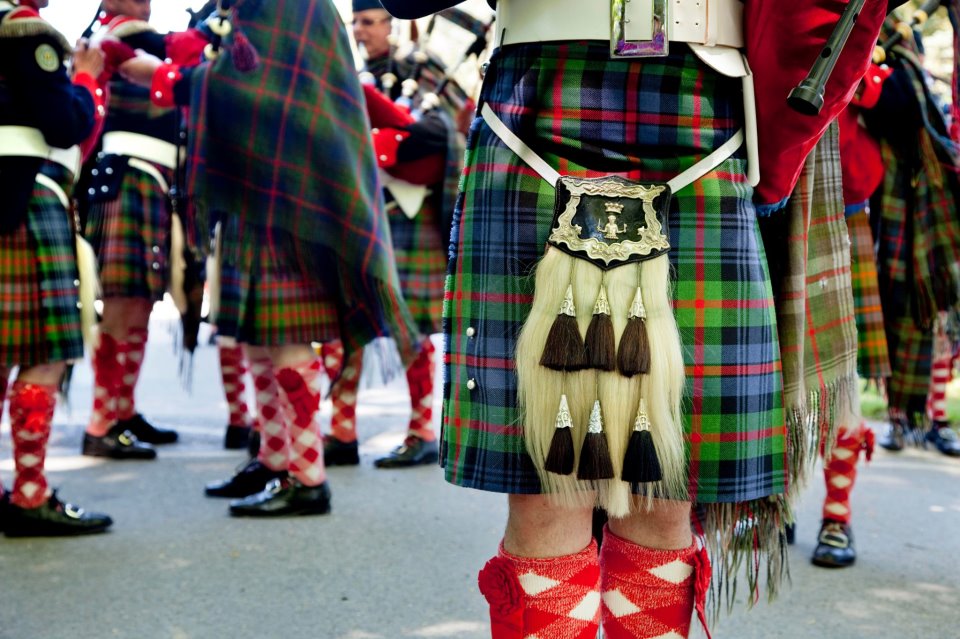
I love this photo from the Facebook page “I am a Scot.” In answer to a question posed in a comment: “What is underneath the kilt?” I quoted from my recently published autobiography entitled, “From Poverty to Poverty: A Scotsman Encounters Canada.” It concerns my life as a teenager in the late 40s in Campbeltown, Argyll.

“During those years I was also in the Army Cadets. It was something to do midweek, especially during the winter. There I was issued with a tartan kilt that I just loved to wear—it meant that I was truly Scottish. (Well, didn’t it? Now I wear my own kilt any time I get the chance.) Good job we didn’t wear anything under the kilt, for I didn’t have any underpants anyway! I can remember older cadets checking us to be sure we weren’t wearing anything underneath.”

Writing Dialogue isn’t Easy

Writing Dialogue isn’t Easy. Please check out the referenced posting from Francis Guenette on her blog: “disappearing in plain sight – writing about writing”. I’ve also added the following comment with reference to the difficulty of writing dialogue.

Thanks for this post. It’s very true that writing dialogue isn’t easy. The particular “problem” I’ve encountered in writing dialogue in both my novel: “Beyond the Phantom Battle: Mystery at Loch Ashie” and my autobiography: “From Poverty to Poverty: A Scotsman Encounters Canada” was writing in the Scottish vernacular, as both books were set in Scotland (the latter partially so).

My editor, who is not Scottish-born, had quite a workout learning the spelling and nuances of my attempt to record written Scots-English. In fact, one computer program sent us the message that there were so many errors in spelling that we could not use the spell-check!!! In the novel, which uses the vehicle of time travel, I also had to try to convey that the Scottish persons my 21st Century heroes encountered when they found themselves somehow transported back to the 12th Century spoke in the Gaelic but the heroes, who didn’t speak or understand Gaelic, heard it as Scots-English and vice-versa. I chose to show the Gaelic, not by using that language, but by eliminating all contractions from their speech and using old-fashioned words or sentence structure whenever possible.

One reviewer remarked that he found the dialogue stilted and old-fashioned at times, not recognizing why I chose to use the differing speech patterns. On the other hand, another reviewer remarked that the dialogue read realistically for the most part and added, “Character personalities come through well in their speech, and you’ve managed to suggest the Scottish ‘lilt’ without overdoing it. I don’t know how you do it, but there’s a cadence to some of the speech that just seems to work. Very nice.” I can only conclude that some reviewers “get it” and others don’t. That probably goes for general readers as well. I now realize I should have addressed the difference in speech patterns in a preface to the book.

Having learned my lesson, I noted in the preface to my autobiography: “The reader will notice that I’ve used the Scottish vernacular when Scots are speaking amongst themselves and normal English when they are speaking with non-Scots. That reflects my own speaking pattern. When among Scots, my speech becomes increasingly ‘Scottish-sounding.’ For example, ‘Ah’ (I); ‘tae’ (to); ‘ye’ (you); ‘no’ (not); ‘canna’ (cannot);’ ‘oor’ (our); ‘widna’ (would not); ‘aboot’ (about); ‘aye’ (yes), etc. I’ve also used British words for the period before I emigrated from Scotland (such as ‘lorry,’ ‘chap,’ ‘bloke,’ and ‘cheerio’); and changed them to North American words sometime after I immigrated to Canada (such as ‘truck,’ and ‘guy’). My editor and I had a disagreement about allowing ‘Scottishisms’ (as she calls them) into my narrative. I insisted on leaving them in, however, for that’s how we (Scots) speak. Thus you’ll find the occasional sentence such as ‘So, there’s me, the great boatbuilder.’ instead of her ‘cleaned up’ version, ‘So, there I was, the great boatbulder.”