A Photo A Week Challenge: Blue and White

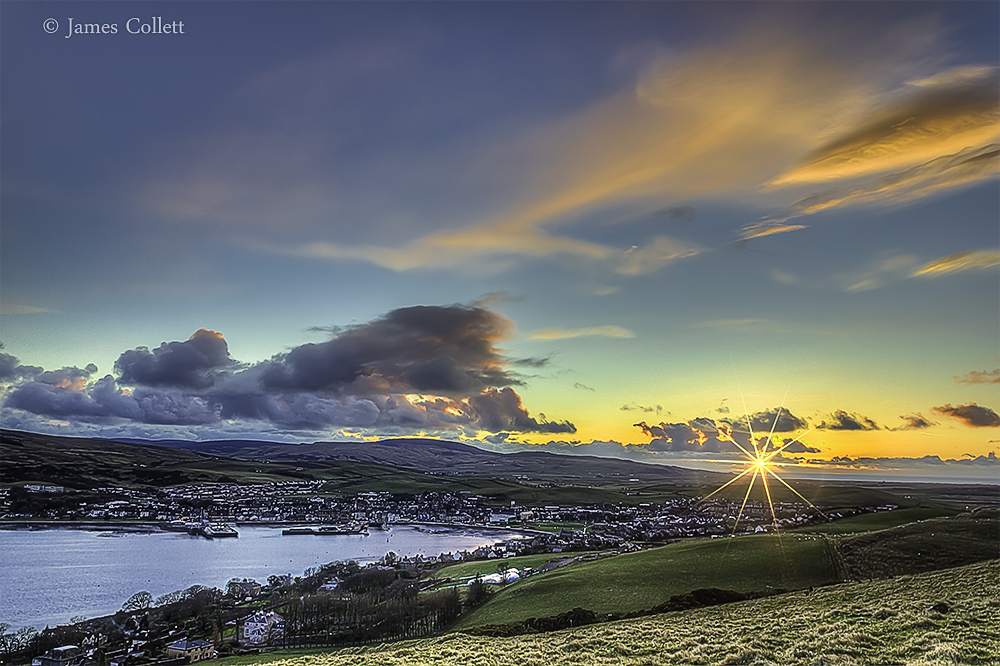
Thanks, James, for another fine photo of Ian’s hometown area. He had Campbeltown’s mountain, Beinn Ghuilean (or Ben Guillion as Ian and others sometimes spell it), in mind when he penned his short story “The Moonlit Meeting” which can be read  by going to that section of our blog.

Ian describes the background to his story thus: “I wrote this short story around 2001 when I was living in Pictou, Nova Scotia. It was my first attempt at writing dialect, though this time it wasn’t Scots-English but Irish-English. I heard this dialect a lot as a youngster since my step-father, Bill Moorhead, was from Larne in Northern Ireland.

“When picturing ‘Mary’s Mountain’ I had Ben Guillion in mind, the mountain that I climbed many times just outside my hometown of Campbeltown on the Kintyre peninsula in Argyllshire, Scotland. On a clear day we could see the coast of Northern Ireland from Campbeltown.”

Weekly Photo Challenge: Abandoned

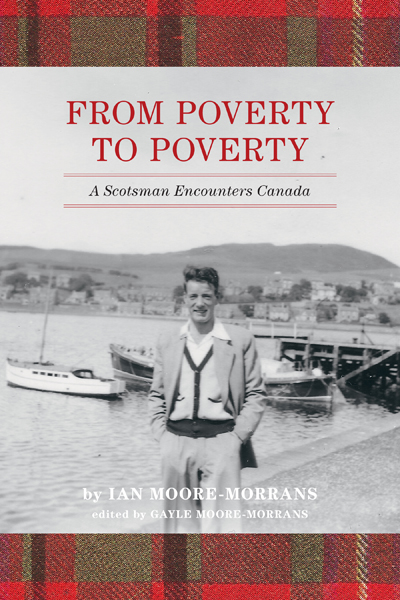
So many of James Collett’s photos remind us of stories from Ian’s memoir, “From Poverty to Poverty: A Scotsman Encounters Canada.” This photo that James just posted brings to mind Ian’s story of his stepfather Bill Moorhead building a boat from the remains of a wrecked vessel abandoned on the shores of Campbeltown Loch. We’ll post pertinent excerpts from the book along with this reposting of James Collett’s photo on our website: ianmooremorrans.com. Thanks for sharing another amazing photo, James.

The Scottish Roots of Curling

The Scottish Roots of Curling

Andrew McDiarmid has shared on his Simply Scottish blog this fascinating account of the origins of the sport of curling. Thanks for posting this Andrew. We are also enjoying tuning in to your “Sport in Scotland” series on your PodOmatic broadcasts on Simply Scottish.

It has been great watching both the CANADIAN MEN’S AND WOMEN’S OLYMPIC CURLING TEAMS take the GOLD MEDALS at the Sochi Olympics. We are also sharing this in honour of our son-in-law, Eugene (Carl) German of Winnipeg who is also a champion curling skip.

Andrew McDiarmid's avatarThe Simply Scottish Blog

Like a number of sports, the origins of curling are up for some debate. After all, who can say which person or people group were the first to enjoy skimming stones across frozen water? Because of the conditions needed, it seems a sure bet that it originated in a northern European country. Wherever it began, few will dispute the fact that the pastime developed into a modern sport in Scotland.

The first evidence of such a game in Scotland was uncovered when an old pond was drained in Dunblane. Two curling stones were found bearing the years 1511 and 1551 on them. Written evidence from 1540 records what seems to be a legal dispute that was settled on the ice between John Sclater, a monk in Paisley Abbey and Gavin Hamilton, a representative of the Abbot. The word curling appears in the work of Scottish poet and historian Henry Adamson…

View original post 433 more words

Andy Stewart and “Campbeltown Loch, I Wish Ye Were Whisky”

'The Toon'

In our previous post we reblogged this gorgeous photo by Scottish photographer and blogger James Collett from Ian’s hometown area, Campbeltown, Argyll, on the Kintyre peninsula in southwestern Scotland. This has to be one of the most beautiful photos we’ve ever seen and it makes Ian a wee bit homesick.

Below is the promised excerpt regarding Campbeltown Loch and Andy Stewart from Ian’s memoir, “From Poverty to Poverty: A Scotsman Encounters Canada,” pages 31-32, copyright © 2012 by Ian Moore-Morrans.

“The loch at Campbeltown (a sea-loch) is in the shape of a horseshoe lying on its side with the opening facing east. (‘Loch’ is the Scottish word for ‘lake.’ It has a guttural ‘ch’ sound similar to that in the German word ‘ach.’ The sound is made by forcing air between the back of the tongue and the soft palate at the roof of the mouth. This is a totally alien sound to most English-speaking people, who generally manage to say ‘lock’.)

“Campbeltown Loch is about three kilometers (two miles) in length from the opening of the ‘horseshoe’ to the harbour at the western end. Guarding the mouth of this haven for sailors during rough weather is Davaar Island (two syllables, Da-vaar—emphasis on the ‘v’).

“The first lines of a song about Campbeltown Loch, I would like to think “us wee boys’ in Campbeltown gave to a certain wee man as the idea for a hit song he made famous in the 1960s— ‘Campbeltown Loch, I Wish Ye Were Whisky.’ (Some claim it was an old Scots folk song or a song based on an old pipe tune; others that it was written by Andy Stewart.) Whatever the truth, renowned Scottish entertainer Andy Stewart (now deceased) made it a very popular song in Scotland, possibly all over the world. You see, as we were growing up, three or four of us would go arm in arm down the street singing the first few words—’Campbeltown Loch, I wish ye were whisky’—that’s all we knew at the time. I like to think that Andy heard those few words sometime in Campbeltown and created a song around them. ‘Oh, Campbeltown Loch, I wish ye were whisky, Campbeltown Loch, och aye! Campbeltown Loch I wish ye were whisky, I would drink ye dry!” [1]

“The verses cleverly have the singer imagining how nice it would be if the loch were full up to the brim of whisky and he could anchor a yacht in the whisky-filled bay to go in for a nip and a dip ‘by night and by day.’ Clan gatherings would feature wading into the loch with toasts of ‘Slainte Bha’ (pronounced ‘Slanj-eh-vah’—good health). The only problem would be the police showing up in a boat and shouting, ‘Time, Gentlemen, please!’ I find this a fitting tongue-in-cheek ode to a town that once boasted of 30 distilleries and still produces at least two very fine brands of single malt whisky – Springbank and Glen Scotia.

“(I’m going to jump many years ahead now to the time that my wife and I went to hear him when Andy Stewart was performing in Winnipeg, Manitoba. When he was exiting the theatre, I went up to him and asked if I could shake his hand. That got his attention! I thanked him and told him that he had put my little town on the world map. Then I told him the story of us boys singing the only bit that existed away back then. …)”


[1] Chorus of “Campbeltown Loch, I Wish Ye Were Whisky” a Scottish folk song popularized in the 1960s by Andy Stewart (1933-1993).
 
AUTHOR IAN MOORE-MORRANS CHOSEN AS ONE OF “50 GREAT WRITERS YOU SHOULD BE READING” FOR 2013-2014

AUTHOR IAN MOORE-MORRANS CHOSEN AS ONE OF “50 GREAT WRITERS YOU SHOULD BE READING” FOR 2013-2014

50 Great Writers logoIan_Moore_HeadshotCover full sizeSee the Media Release that has just been published about Ian’s win by pressing here: In The News