BIRTHDAY LIMERICKS

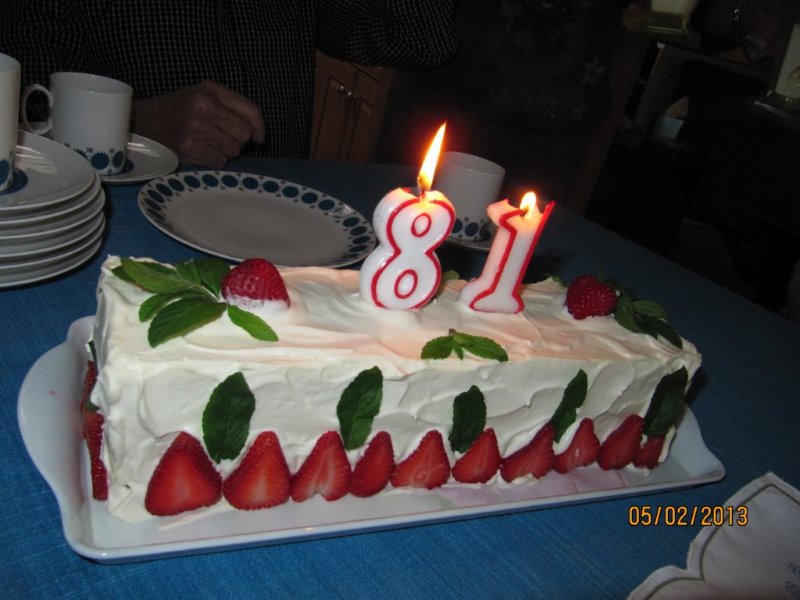
Ian 81 Bday cake

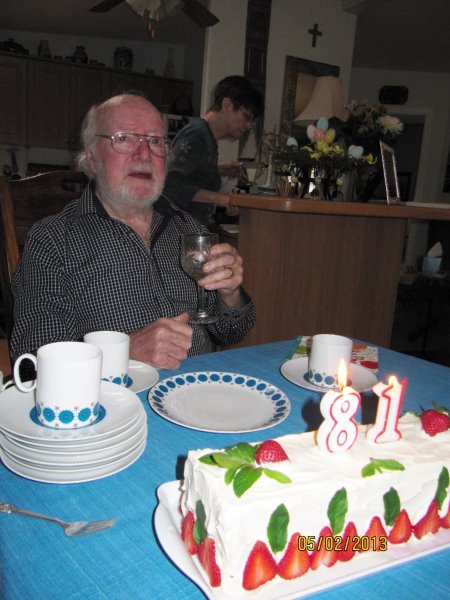
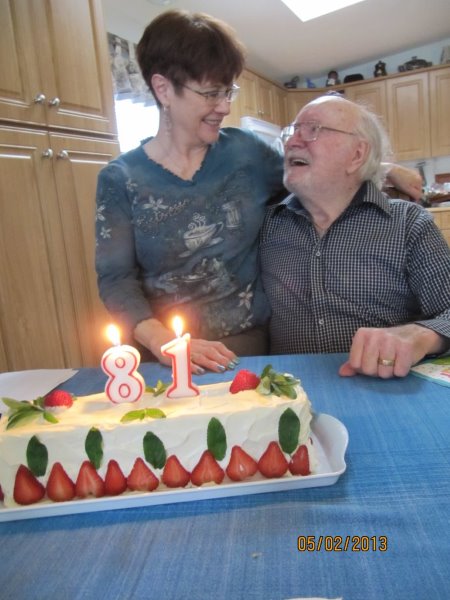
We celebrated IAN’S 81ST BIRTHDAY on May 2, 2013 with three other couples who have become very good friends to us since we moved to Vernon five years ago. Here we’ll share a few photos from the party, including one of friend Fernando accompanying us as we sang “Happy Birthday” to Ian. Usually our parties are centered around singing. This party centered around writing, with the theme  “Birthday Limericks.” We suggested that the limericks could center around one of Ian’s favourite things such as writing stories, singing, all things Scottish, his love of dancing or his favourite drinks – Scotch whisky and  good white wine.

LIMERICKS are a special kind of poem. Usually they have a five line cadence with a pattern of AABBA (in other words, the first, second and fifth lines rhyme and have the rhythm dah DAH, dah dah DAH, dah dah DAH; while the third and fourth lines rhyme and have the shorter rhythm dah dah DAH dah dah DAH. Ian is a fan of poetry ONLY when it rhymes. In fact, he claims a poem isn’t really a poem if it doesn’t rhyme. Therefore, the limerick is his favourite kind of poetry.

Bday Boy

Inspired by a fellow blogger (Flammeusgladius aka Tom Riley) Gayle had asked our guests to each write a limerick for Ian as a birthday gift. In thanks Ian has come up with the following limerick. For anyone who isn’t familiar with the Scottish use of the term “the noo”, that means “now” or “at the present time.”

Thanks to all for your limericks true

Heartfelt greetings from all of you.

You can tease, you can praise

And your glasses you raise.

but I’ll stick with coffee, the noo.

Gayle had corresponded with blogger Tom Riley prior to the birthday and, true to form as he puts his whole blog (Flammeusgladius)  into limerick form, he came up with this post on his blog for Ian’s birthday:

Birthday Dram

by flammeusgladius

(for Ian Moore-Morrans)

It’s with joy, and with no trace of sorrow,

That, upon an occasion I borrow

From your family, I drink

This Scotch neat.  And I think

You should add a new birthday tomorrow.

So here are the rest of Ian’s birthday limericks for your enjoyment:

From wife and editor Gayle:GayleIan Bday 81

Dear Ian, you’ve turned eighty-one.

Who says you’re too old to have fun?

We can sing, we’ll sip wines;

And we’ll both write some lines.

And that’s why I love you so, Hon!

From friend Nita:

Now we know that Ian’s Scottish.

As a dancer he was “hottish.”

He’d quick step; the girls would cling,

Then he’d do the Highland Fling.

But tell me, did he ever dance the Schottishe?

From our friend and accompanist Fernando:

Fer playing Happy Bday

Hey, Ian, I will play for you piano.

As long as in my ear you do not bellow.

Gayle has warned me, you sing loud.

When you entertain a crowd.

So go easy now, it’s better to sing mellow.

From Eric (a fellow Scotsman):

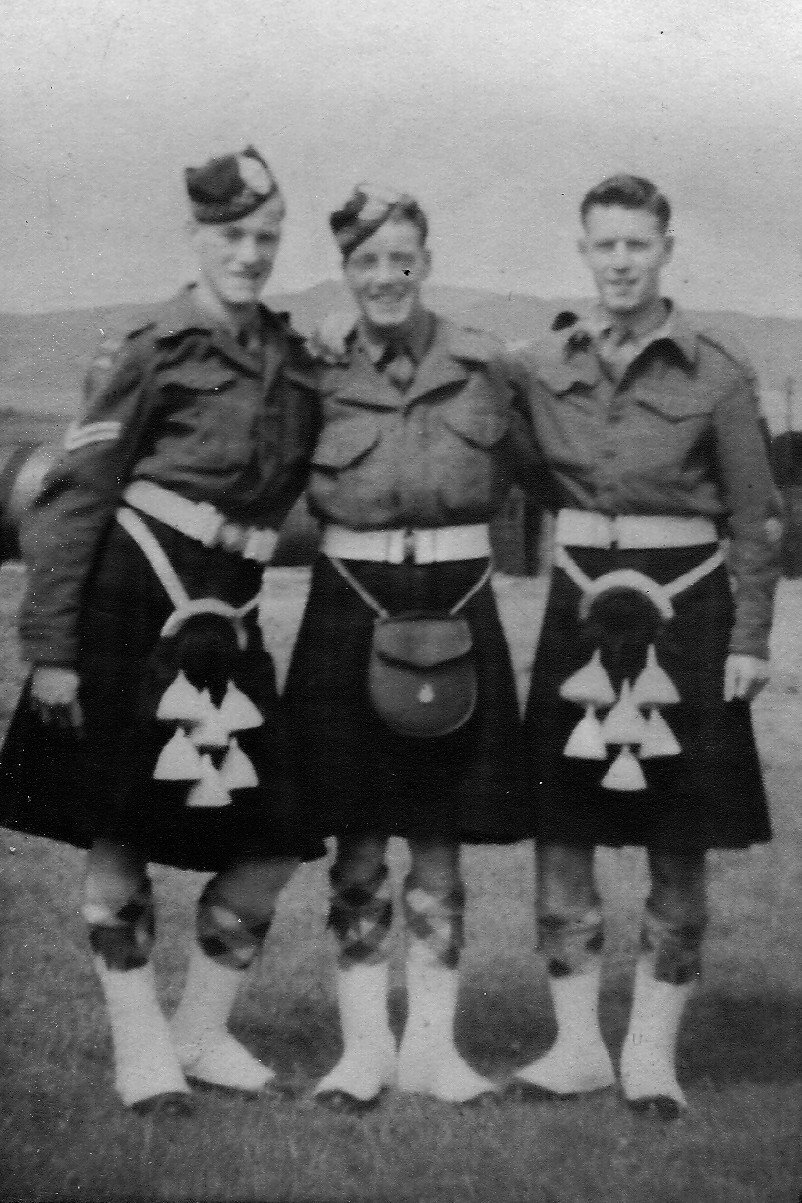
He wears a kilt

and sings wi’ a lilt.

He wears a tam

and likes a wee dram.

Now he and his lass

they are top class.

So sing for me

a tune that I luv

A song of my land

And that is “Misty Island.”

 (Note: “Misty Islands of the Highlands” is Ian and Gayle’s favourite song to sing together as a duet.)


From Patch:

Life of Ian

First poverty, then military.

The young Scottish millwright did marry.

Lived all over Canuck land.

Chased Incas with Gayle in hand.

Now as author in Vernon he’ll tarry!


From Gail (and Bill):

A task I’ve been handed for Birthday Boy Ian

He’s the best Scotch drinker that I’ve ever se-en

He’ll top up that glass

While he calls for his lass.

If I got paid for this, it’d be pretty le-an!

**

There’s Ian the Birthday boy in the kilt

When you hear him talk, there’s a wee bit o’ lilt.

He does talk to the dog

Then falls asleep like a log.

It just must be the way he is built!

**

If a young Scotsman moved across an ocean

Would it be Ian and would he have a notion

To work really hard and sing when he could

Perhaps write a book and make it real good

Then later drink a Scotch whisky potion?

**

OK, so we’re not pros at this limerick writing and maybe our meters and rhyming schemes were sometimes a bit of a stretch. But we really had fun and the topics were all very appropriate. We were happy, Ian was happy — what more could we ask for?  A good time was had by all! Once again, Happy Birthday Ian.

On My Way Home

This blog moved me as I’ve been the parent of a prodigal son who has finally been returned to the family, although not physically. I’m excited to be planning a trip to visit him next month, for the first time in over seven years. I’m also adding at the end of this reblog, my own version of the prodigal son story that I wrote in 2001, during my time as the editor of Esprit magazine. I hope it will be an encouragement to others as Sammy’s post was to me. Gayle Moore-Morrans<!

From the Editor
A Tale of Grace
“For by grace you have been saved through faith; and this is not your own doing; it is the gift of God.” (Ephesians 2:8). Grace is a word that is central to our Christian faith and especially dear to those of us who, like Martin Luther, cling to “grace alone.” The grace of God abounds in God’s promise of unconditional love. Grace is evident in the stories of God’s people as they struggle with the ordinary and sometimes extraordinary happenings of daily life—in our relationships, contentions with evil influences and in our striving to live godly lives. Let me relate one such grace-filled tale.
There was a mother who had a daughter and a son. The father had died after a long, debilitating illness that caused tremendous strains on the family. The mother and daughter were blessed with strength they hadn’t even been aware they had—strength to deal with the grief and despair facing the family. Alas, the son was not able to call on those strengths. He lost his pleasant demeanor and easy laugh, his joy of living. God seemed totally distant to him and not able to help. The son began to act out at home and school—dropping out or running away from responsibilities, commitments and relationships. He alienated teachers, authorities and finally the family itself. Beginning to associate with others who were estranged from society, he soon was into the drug scene. He sold, pawned and traded his own and family members’ possessions to support his habit. Whether the cause of, or a consequence of drug abuse, a severe depression overcame the son. The depression only increased as the drugs interfered with any medication prescribed to treat the disease. The mother arranged for school, personal and family counseling, psychologists, psychiatrists, social workers and treatment programs. The son consented to try some, but soon dropped them; others he flatly refused to cooperate with or participate in. In the midst of this it became necessary for him to leave the family home, entering into a series of foster homes and residential schools.
Over the years, the mother kept up contact with the son when he would allow it. She slowly learned that the only way to help her son was to let him go—let him experience the consequences of his own actions, no matter how badly or helpless it made her feel. The one action left to the mother was prayer—calling on the grace of God to work in the life of her son and to eventually bring home the prodigal. And pray she did—bombarding heaven with clenched hands, tortured words and sighs too deep for words—beseeching God’s Holy Spirit to work in the life of her son.
As the years passed, the family relationship continued, with numerous ups and downs. On two occasions the son returned home for awhile, full of promises of reform; the mother full of hope that a change had really taken place; the daughter skeptical, but resigned to another attempt at reconciliation. Twice the attempt failed, with the son again embarking on the wayward path.
Then came the gift of grace—God’s free, undeserved gift to the son and the mother—and maybe even to the daughter. Being not much given to self-revelation, the son never really said what had brought him to the realization that he was on the fast track to destruction. Whatever it was, he finally cried out for help. On his own, he sought hospitalization, counseling, an addictions treatment program and reconciliation with the mother. All this took months with many stops and starts, fears and despair. But he did not waver from his stated desire to get away from the lifestyle in which he was mired. Finally, released from the hospital and beginning addictions treatment, he asked the mother to let him return home on a trial basis. It took all of her faith in God to call up the trust she needed to let him try again. Following a pattern set by the brother of the prodigal son in Jesus’ parable recorded in Luke 15, the daughter blew up, rebuking the mother for putting her faith in a lost cause and leaving them open once again to exploitation and disappointment. All this was followed by slammed doors and the silent treatment.
The tale is still unfolding. The mother was encouraged by a hug between siblings as the sister embarked on a summer’s vacation. Adjustments in medication are still causing ups and down for the son. How to deal with old friends from the bad times is still a problem to be solved. Getting on with life, carrying through with his stated intentions, continuing treatment, completing an interrupted education, rebuilding estranged relationships, making room for God in a life where God has not been welcome—all this takes time. But God’s grace has become more and more evident to the mother. She prays it will continue to unfold for her son and her daughter—grace for renewal, unreserved love and forgiveness for new life.
This issue contains other tales of lives enriched and renewed—all through the undeserved grace-gifts of God. (Perhaps some of us will even be moved to record our own or others’ grace stories.) May we celebrate this summer—and always—basking in God’s grace!
Gayle Moore Johannesson, Editor
(reprinted from Esprit, the magazine of Evangelical Lutheran Women, Summer 2001 issue, copyright © 2001)
Note: That was not the end of the story. More grace was needed as problems caused by addiction returned and returned, the family was again separated and estranged over a long period of years. But God’s grace, though sometimes it seemed absent, has returned and been renewed. Thank God for grace, faith and endurance. Gayle Moore-Morrans, 2013

Sammy's avatarInsight-Seeing From Within

Come Home Title ScreenI must have read the story of the Prodigal Son (Luke 15:11-32) to my children a million times over the span of their childhood. I am not going to proclaim it was their favorite or even mine. But it was a good story that related to others and not me because in those days I was on fire for God and there was no way that I could or would ever become a prodigal son.

Unfortunately I labeled others who I saw seemingly leaving Gods will, forsake their calling, burying their talents etc.

See the problem was this, I never really met a real live contemporary prodigal.

I mean, no believer goes out one day and says, ‘that’s it I am going to be a prodigal son.’

I know this because, well, hmm, oh God help me say this, ok do it….I became a prodigal son myself.

Let me explain.

After…

View original post 722 more words

ALL ABOUT THE “REAL” JIMMY, AN EXCERPT FROM “CAME TO CANADA, EH?”

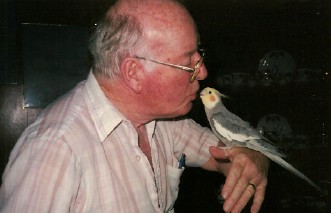
As I (Gayle) am preparing chapters of Ian’s children’s chapter book “Jake, Little Jimmy and Big Louie” to blog, I’m also working on my second (and I hope final) edit of the sequel to Ian’s already published memoir: “From Poverty to Poverty: A Scotsman Encounters Canada.” I’ve already blogged an excerpt from the sequel which we have named” “Came to Canada, Eh? Continuing a Scottish Immigrant’s Story.” Today I’ve just completed editing a section in which Ian describes receiving his real-life bird, a cockatiel he also named “Jimmy.” I thought it might be appropriate to blog this section to give readers an insight into some of the things Ian learned about raising a bird and teaching it to speak and whistle. He later added some of these ideas to the children’s story that is now “Jake, Little Jimmy and Big Louie.” You will notice that certain things Ian experienced with his cockatiel Jimmy later were used in the characterizations of Little Jimmy and also of Big Louie. I’m also including a 1998 photo of Ian and Jimmy, the cockatiel.

Ian and Jimmy

Excerpt from “Came to Canada, Eh? Continuing a Scottish Immigrant’s Story”

by Ian Moore-Morrans

edited by Gayle Moore-Morrans

Copyright © 2013

“Mary and I went down to Winnipeg to spend Christmas with Audrey and Eugene and our three grandchildren, Tammy, Calan and Ainsley in 1997. Then, since Mary and I had been married on the 29th of December, we returned home to Creighton to celebrate our anniversary. We were at Shirley and Brien’s house for a quiet evening on our wedding anniversary when Shirley suddenly appeared carrying a great big bird cage.

” Inside was a beautiful, young cockatiel. He and the lovely cage were being presented to us from our two daughters, their husbands and all five grandchildren, including young Ian and Tiffany. I was invited to take the bird out of its cage and hold him on my hand. He came with no bother and Shirley asked me what I was going to call him (it). Without any hesitation I said ‘Jimmy’ (after the little budgie in my unpublished children’s book, not caring what sex the bird was!). He was such a lovely surprise gift for both of us. And he really was a ‘he’, we found out later.

“Jimmy took quite a lot of looking after, for I had to feed him egg almost continuously, and clean his cage almost continuously, too! He was on the egg diet a long time, longer than he should have been. Brien had obtained Jimmy from a friend at work who bred them. From what Brien learned, Jimmy should have been on seed when he was still enjoying his egg. I had bought some seed for him, but he didn’t seem ready for it. When I was cooking for him, I would generally put two, sometimes three eggs in the pot and boil them hard, storing them in the fridge, for Jimmy seemed to be always hungry. I would cut off a little bit and wrap the remainder for later, making sure that Jimmy also got some of the yolk (that is what he went for first) along with some white.  In the beginning I’d chop the egg up for him, but I soon found that doing so was a complete waste of time, for his little sharp beak would slice through the soft egg just like butter.

“Soon I set about teaching the bird things to say and whistle. Being a musician, I don’t think it is bragging to say that I’m a pretty good whistler as I’m able to do quite a bit of fancy stuff like grace notes, triplets, warbles and different things—a lot of stuff that I did on the trumpet.  Soon our bird was saying ‘Jimmy’s a good boy’ (just like in my little story), ‘Hi Ian, wot’s up?’, ‘Hello, Mary’, ‘I love Shirley’ and so forth. He also started whistling the verse of “Bonnie Jean” from Brigadoon that I was rehearsing for my solo at our upcoming concert in Flin Flon. (I didn’t teach him this, he just picked it up while I was whistling it around the house and going through the words in my head.) In addition, I taught him to whistle the first part of ‘The Mexican Hat Dance’; the bugle call that goes, ‘You gotta get up, you gotta get up, you gotta get up in the morning’; a series of notes from a ‘custom’ car horn, and a silly something we used to sing in Scotland when I was a wee boy that ended with ‘Wee Bobby Geachy’s……white drawers.’ The latter bit used the popular rhythm that everyone knows: ‘Dah Dahdah  DAH  DAH…dah dah!’ However, what I taught Jimmy varied in that I substituted a wolf whistle for the last two notes (the last ‘dah dah’). Jimmy really did it superbly. (Sometimes I would whistle the first bit and he would answer with the wolf whistle and other times it would be reversed, with Jimmy starting it off.)

” Jimmy really performed to perfection the day I was dressed in my kilt just prior to leaving the house for the dress rehearsal of the show I was in. Jimmy’s cage was in the dining room and as I passed the door opening that would allow him to see me, he went, “Wheeet-wheeoo”—a perfect, long, wolf whistle.  I burst out laughing. It was like he did it intentionally, his timing was so right. My answer was, ‘Hey, funny guy. You’ve never seen a Scotsman in a kilt before?'”

Installment 7 of “Jake, Little Jimmy and Big Louie,” a Children’s Chapter Book

Thanks to everyone who has contacted us through WordPress or email saying that they are enjoying our blogging of Ian’s children’s chapter book, “Jake, Little Jimmy and Big Louie.”  We’re still glowing from our great-grandson’s very positive endorsement of the book so far. I, Gayle, will try to be more diligent in getting the rest of the book’s chapters blogged (now that I am off crutches and my new hip is healing nicely) so that we will be able to get into production of the children’s book, hopefully by late spring.

At the same time as this book is being blogged, I’m deep into editing the next volume of Ian’s memoir or autobiographical stories which we are calling “Came to Canada, Eh? (Continuing a Scottish Emigrant’s Story.)” Those of you reading this blog would perhaps be interested in reading an excerpt from that as-yet-unpublished book which tells of Ian’s beginnings as a writer. He began with this very children’s book that we are now blogging.

To set the scene, Ian and his late wife have just moved back to Winnipeg (again). Ian is 63 years old and deciding to finally do what he has always wanted to do but never before found time for. Here’s a excerpt from “Came to Canada, Eh?”

“My whole life I had always wanted to write stories, but the situation was never the way I wanted it to be. Whenever, for example, I wrote a letter to anyone in the Old Country, I would end up sending about 14-16 pages—and I would get one page in reply. Finally, at age 63, I said to myself, ‘Ian, if you don’t start to write now, then you’ll never do it.’ So I sat down and, over a period of three evenings, wrote ‘My Friend Jimmy’. It was a children’s story about a budgie that had no wings—just 16 pages. But I had to write everything longhand. I asked Audrey [our daughter] to keep her eyes open for an old, cheap electric typewriter for me.

“’What do you want an electric typewriter for, Dad? You’ll be wasting your time. Why don’t you get a cheap computer; that’ll do the same thing only better for you?’

“Oh, that was a terrible word to use in front of an old codger like me—a computer? Sudden terror at the thought of even having one in front of me! Well, she eventually managed to convince me that that is what I should get. ‘You can pick one up dirt cheap, Dad. Do you want me to look for one for you?’

“It was a 286, black and white monitor, no hard drive, just two 3.5” floppy disks; but it was a start. I then became a little more ambitious—going to the library and getting out one of those foldout learn-to-type books that stands upright on edge (like a pyramid) and I started to learn to touch type. Me, an old . . . well, something. And I was improving too—starting to type simple sentences without looking at the keyboard. Pretty soon I got myself a 386 computer, then later it was up to a 486, and then a Pentium! Hey, who was that guy who said that the 286 was all he would ever need? I got the Mavis Beacon typing course (on a CD) and was able to calculate that I was up to more than 20 words a minute, even allowing for errors! ‘Not bad for an oldie,’ I thought.

“While I was improving on my typing, I rewrote my children’s story, and kept editing it until it started to look a lot better. I changed some of the contents and then sent it away to a publisher, knowing full well that he would grab it and tell me that it was the very best children’s story he had ever read. … Some hope! Soon I could just about paper the wall with rejections. ‘Never mind,’ I thought, ‘where there’s life, there’s hope.’ I put the story on file and went on to write other stories, thinking that I’d give “My Friend Jimmy” a try again at a later date. (Little was I to know that the later date would be lots later—about 17 years!)”

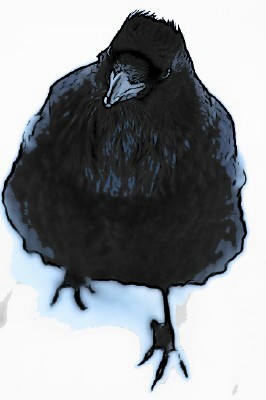
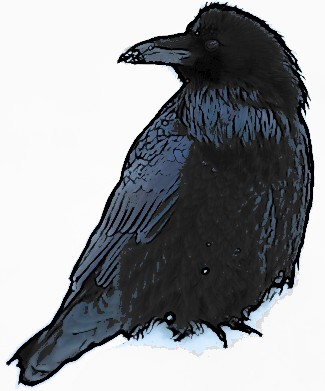
Much has happened since the years those words were written. Since then Ian was widowed, then remarried – this time to me (an editor). So we’ve now published three books and hope to have this children’s book finally published before long. Below is our blog of Chapter 7 plus two drawings we found on the computer of an “adolescent” raven whom Louie might have resembled.

Raven 1 Raven 2

“JAKE, LITTLE JIMMY AND BIG LOUIE”

by Ian Moore-Morrans

edited by Gayle Moore-Morrans

Copyright © 2012

CHAPTER SEVEN

Louie Gives Jake a BIG Problem

The next day was Saturday. Jake was at his local library first thing in the morning, waiting for the doors to open. Once inside, one of the staff helped him look for books about birds.

(The rest of the chapter’s content has been deleted prior to publication.)

* ~ * ~ *

Picture suggestions:  Louie standing on the ground and “talking” while looking up at Jake and Jimmy, who is on Jake’s shoulder.

Louie flapping his wings.