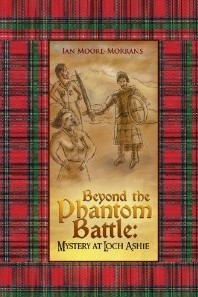
With thanks to Xlibris, the self-publishing company with which we published Ian’s novel, Beyond the Phantom Battle: Mystery at Loch Ashie, we are re-posting the latest encouragement about self-publishing from the Xlibris website.
Self-publishing has been both an enjoyable adventure and a lot of work. We enjoy the freedom self-publishing gives us to publish and edit our books with a free hand. It is good to see that a number of very successful authors have also gone through the self-publishing procedure.
The following article is re-posted from Xlibris:
“Getting Your Push from Big Name Indie Writers
“They say it is wise to learn from the mistakes of others. This also holds true for self-publishing. Famous independently published authors—then and now—have been rejected by traditional publishers at one point but eventually made a name for themselves by choosing a publishing route off the beaten track. If, however, you have already stumbled along the way, these nuggets might save you from giving up your self-publishing dreams.
“Alexandre Dumas (1802-1870) Born and raised in poverty with his father dying when he was four, Dumas faced discrimination because of his ethnic African ancestry. However, with his rich imagination, the Count of Monte Cristo author overcame his lowly social stature by penning quite a number of high-adventure tales and historical chronicles published under his name. His works were translated in numerous languages, making him one the world’s widest-read French writers.
“Edgar Allan Poe (1809-1849) The creator of the detective fiction genre had to fight tooth and nail to make a living from his craft. The American literary genius was unfortunate to have written at a time when the US publishing industry suffered from weak copyright law. While his first self-published work The Raven didn’t bring him much financial success, the poem is considered one of the greatest gems in literature history.
“Mark Twain (1835-1910) The American author of the timeless novel The Adventures of Huckleberry Finn built his own publishing company that flourished but suffered bankruptcy following a failed investment in a faulty typesetting machine invention. To rebuild his fortune, he used his natural gift of gab, touring different countries for public speaking engagements. He also wrote more books to pay off his debts.
“George Bernard Shaw (1856-1950) The Irish playwright had initially published his early works to attract producers. Although his first novels were a flop, he was a dedicated playwright who learned from his mistakes. ‘Success does not consist in never making mistakes but in never making the same one a second time,’ he said.
“Rudyard Kipling (1865-1936) The British Nobel Laureate in literature was known to be a fervent artist who wrote almost without pause. He reported for his newswriting job six days a week, with only a day each off Christmas and Easter breaks. His passion for writing was such that he self-published his first collections of poetry. The rest, as they say, is history.
“Stephen Crane (1871-1900) Hailed by literary pundits as ‘one of the most innovative writers of his generation,’ he started writing at the age of four and published his early works at age 16. His first novel Maggie: A Girl of the Streets was, however, rejected by a traditional publisher who thought the story was too unrealistic. Crane loaned money from his brother, published the book, and enjoyed commercial success thereafter.
“Virginia Woolf (1882-1941) She and her husband co-owned a publishing company where her works, along with other notable writers such as T.S. Eliot, were published. Although she believed that “a woman must have money and a room of her own if she is to write fiction,” she married an average-income earning civil servant with whom she nurtured a healthy personal and business relationship.
“Ezra Pound (1885-1972) As a twenty-something sacked college professor with dwindling funds, the American poet self-published his first poetry book, A Lume Spento (With Tapers Spent). He sold 100 copies at six cents apiece. The compilation was praised by The London Evening Standard for being ‘poetic, original, imaginative.’ Pound also befriended celebrated Irish poet W. B. Yeats, whose publisher promoted the book, resulting in its success.
“Anaïs Nin (1903-1977) She is best known as one of the pioneer women writers of the female erotica genre. The French-Cuban diarist, whose journals detailed her own erotic adventures, self-published her first book Under a Glass Bell. The book, hailed as Nin’s finest work, launched her literary success.
“E. L. James The British author of the best-selling novel Fifty Shades of Grey revealed that the novel sums up her ‘midlife crisis.’ Starting out as a fan fiction writer, she got her inspiration from the vampire series The Twilight Saga. The worldwide-commercial success of the erotic trilogy has proven that a novice writer can make it big in the publishing industry.
“Amanda Hocking Cashing in on the popularity of vampire-themed novels, the twenty-something American novelist, formerly a group home worker, has used the booming e-book industry to self-publish her paranormal romance novels. She has sold more than a million copies and was the first self-published author to hit $2 million in sales in 2011. She later signed a $2-million worth contract with a traditional publisher.
“J. A. Konrath The American e-book writer of mystery, thriller, and horror genres is an ardent supporter of self-marketing. He holds a spot in the ‘5 E-book Authors To Watch’ by Mediabistro.com. It’s almost impossible to believe that his previously unpublished stories had reportedly been rejected almost 500 times before he reached his rock star status as a self-published author.
“We hope these stories will motivate you and keep you writing, whether you’re considering starting a writing a career or are already working on your first book.”


 MOOMOR PUBLISHING